
Tummy Troubles? Here Are 8 Of The Best Yoga Poses For Digestion In 2026

Feeling Bloated? Let’s Twist and Fold Our Way to a Happier Gut!
Say goodbye to post-meal bloat with a power-packed list of the best yoga poses for digestion. We’ve curated eight targeted asanas that massage your organs, calm your nervous system, and reboot your gut in minutes. No vague advice here, just precise alignment cues, clear modifications, and science-backed benefits that get you moving toward relief.
Here’s what you’ll learn in this roundup:
Every section reads like a quick cheat sheet: short paragraphs, bold highlights, and blockquotes for key insights. You’ll find actionable tips that fit busy schedules and real examples of how to integrate these poses after pizza night or a long flight. With Dalm’s personalized AI tracking you’ll see progress, avoid common mistakes, and keep your core humming.
Ready for a flatter, happier tummy? Let’s roll out the mat and dive into the best yoga poses for digestion.
Feeling more like a blimp than a human after that burrito? Meet your new best friend: Pawanmuktasana, or Wind-Relieving Pose. The name isn't just a quirky suggestion; it’s a direct translation from Sanskrit, literally meaning "wind-releasing pose." This gentle yet powerful posture is one of the best yoga poses for digestion because it acts like a targeted internal massage for your entire gastrointestinal tract.
By hugging your knees to your chest, you apply gentle, therapeutic pressure to your abdominal organs. This simple compression encourages the movement of stagnant air and waste through the digestive system, stimulating the ascending, transverse, and descending colon. It’s the yoga equivalent of hitting the "reset" button on your gut, providing near-instant relief from bloating and discomfort.

Pawanmuktasana is a go-to for yoga therapists dealing with common digestive woes like IBS and constipation. The pose's magic lies in its ability to stimulate peristalsis, the wave-like muscle contractions that move food through the digestive tract. Think of it as gently wringing out your intestines to help everything flow smoothly.
Key Insight: The pressure on the abdomen also increases blood circulation to your internal organs, enhancing their function and promoting better nutrient absorption. It’s not just about relief; it’s about improving overall digestive efficiency.
Ready to deflate and feel fantastic? Here’s how to get the most out of this pose:
If your digestive system feels like it’s stuck in rush-hour traffic, it's time to introduce it to Ardha Matsyendrasana. This seated spinal twist, also known as the Half Lord of the Fishes Pose, acts like a detoxifying squeeze for your internal organs. It’s one of the most effective yoga poses for digestion because it literally wrings out your abdomen, stimulating everything from your liver to your intestines.
This twisting action creates a "squeeze and soak" effect. As you twist, you gently compress your digestive organs, pushing out stagnant blood and toxins. When you release the twist, fresh, oxygenated blood rushes back in, nourishing your organs and kick-starting their function. Think of it as wringing out a sponge to clean it before letting it soak up fresh water.

Often included in yoga therapy for conditions like IBS and chronic constipation, Ardha Matsyendrasana is a champion of digestive health. The twisting motion directly stimulates the colon, pancreas, and liver, encouraging the secretion of digestive juices and enzymes. This enhances your body's ability to break down food and absorb nutrients efficiently.
Key Insight: This pose doesn't just work on a mechanical level; it also aids the nervous system. Twists help to calm the body and mind, which can indirectly improve digestion by reducing stress-related gut issues.
Ready to twist and shout goodbye to digestive sluggishness? Here’s how to do it right:
If your digestive system feels sluggish and sleepy, it’s time to awaken it with a graceful Cobra Pose. Bhujangasana is a gentle backbend that stretches the entire front of the body, creating space and stimulating your abdominal organs. Think of it as a gentle wake-up call for your gut, encouraging everything to move and function as it should.
By lifting your chest off the floor, you create a mild, beneficial pressure on your stomach and intestines. This action helps to massage the digestive organs, increasing blood flow and encouraging the elimination of toxins. As you release the pose, the fresh rush of circulation revitalizes your entire digestive tract, making this one of the best yoga poses for digestion when you need an energizing boost.
Bhujangasana isn't just a pretty backbend; it's a powerful tool for digestive health. This pose is a cornerstone of many yoga practices, like the Sun Salutation sequence, precisely because it effectively stretches and stimulates the abdominal region. The expansion of the belly on the inhale followed by the gentle compression tones the digestive system and can help alleviate symptoms of constipation and indigestion.
Key Insight: The alternating stretch and release of the abdominal muscles in Cobra Pose stimulates the adrenal glands and can help reduce stress. Since stress is a major contributor to digestive issues, Bhujangasana offers both physical and psychological benefits for a happier gut.
Ready to rise up and get things moving? Here’s how to practice Cobra Pose safely and effectively:
Ready to string up your core and shoot digestive distress out the door? Say hello to Dhanurasana, or Bow Pose. This powerful backbend isn't for the faint of heart, but it’s one of the best yoga poses for digestion because it offers an intense, front-body stretch while creating deep, therapeutic pressure on your entire abdomen. It’s like giving your digestive system a firm, invigorating squeeze from the inside out.
Lying on your stomach, you reach back to grab your ankles, lifting your chest and thighs off the floor to create a "bow" shape. This action provides a powerful massage to the liver, pancreas, and intestines. This deep compression stimulates digestive fire (agni), boosts blood flow to your organs, and can help alleviate constipation and sluggishness, making you feel lighter and more energized.
Dhanurasana is a staple in therapeutic yoga for its ability to tone the abdominal organs and glands. By pressing your belly into the floor and using your breath, you create a rocking motion that further massages the digestive tract. This isn't just a stretch; it's an active process of stimulating and revitalizing your entire gastrointestinal system, often used in advanced sequences to stoke metabolic heat.
Key Insight: The pose doesn't just work on your organs; it also stretches the psoas muscles, deep core muscles linked to your fight-or-flight response. Releasing tension here can help calm a nervous stomach and improve overall gut function.
Ready to bend and befriend your belly? Here’s how to safely get the benefits:
Feeling stressed out and backed up? It might be time to take a bow. Uttanasana, or Standing Forward Fold, is a deceptively simple pose that offers profound digestive benefits by tackling gut issues from two angles: physical compression and nervous system regulation. This gentle inversion calms your mind while giving your abdominal organs a much-needed squeeze, making it one of the best yoga poses for digestion when stress is the culprit.
As you fold forward, gravity does the work, creating a mild compression that massages your intestines, liver, and kidneys. This encourages movement and can help alleviate bloating and indigestion. More importantly, this forward bend has a powerful calming effect on the nervous system, shifting you from the "fight-or-flight" state into the "rest-and-digest" mode, where your digestive system can actually do its job properly.
Uttanasana is a staple in yoga sequences designed for stress reduction precisely because of its gut-calming effects. By soothing the nervous system, it helps combat stress-induced digestive problems like cramping and irregular bowel movements. The gentle inversion also increases blood flow to the head and the digestive organs, enhancing their function and promoting efficient nutrient absorption.
Key Insight: The magic of Uttanasana is its dual-action approach. It physically stimulates the digestive tract while simultaneously calming the mind, creating the ideal internal environment for your body to process food effectively.
Ready to fold your digestive troubles away? Here’s how to get the most out of this pose:
If your digestive system feels sluggish and stuck, it’s time to get things moving with one of the most fluid and rhythmic yoga poses for digestion: Marjaryasana-Bitilasana, or Cat-Cow. This gentle, flowing sequence is less of a static pose and more of a dynamic movement that acts like a pump for your entire digestive tract, waking up a sleepy gut.
The magic happens in the transition. As you arch your back in Cow Pose, you gently stretch and lengthen the abdominal muscles and intestines. Then, as you round your spine into Cat Pose, you compress these same organs. This alternating stretch-and-squeeze action creates an internal massage, encouraging movement and stimulating blood flow to your digestive organs, which is fantastic for relieving constipation and mild cramps.
Cat-Cow is a foundational movement in nearly all yoga traditions, celebrated for its ability to gently awaken the entire torso. By linking breath to movement, it calms the nervous system, which is directly tied to gut health. When you're stressed, digestion slows down; this pose helps switch your body into its "rest and digest" mode.
Key Insight: The gentle undulation of the spine in Cat-Cow doesn't just massage the organs; it also stimulates the vagus nerve. This nerve is a critical communication line between your brain and your gut, and stimulating it can significantly improve digestive function and reduce inflammation.
Ready to get your system flowing smoothly? Here’s how to make the most of this digestive duo:
Ever wonder why toddlers can squat for ages with perfect posture? They’re tapping into a primal, natural position, and so can you with Malasana, or the Yogic Squat. This pose is less of a complicated pretzel and more of a return to our body's original design for optimal digestion and elimination. In fact, in many cultures, this is the default posture for going to the bathroom for a very good reason.
By dropping into a deep squat, you create a natural and effective compression of the lower abdomen. This gentle squeeze puts pressure on the colon, encouraging waste to move along its path. It’s a grounded, earthy pose that directly leverages gravity to help your digestive system do its job more efficiently, making it one of the absolute best yoga poses for digestion when you're feeling stuck or sluggish.
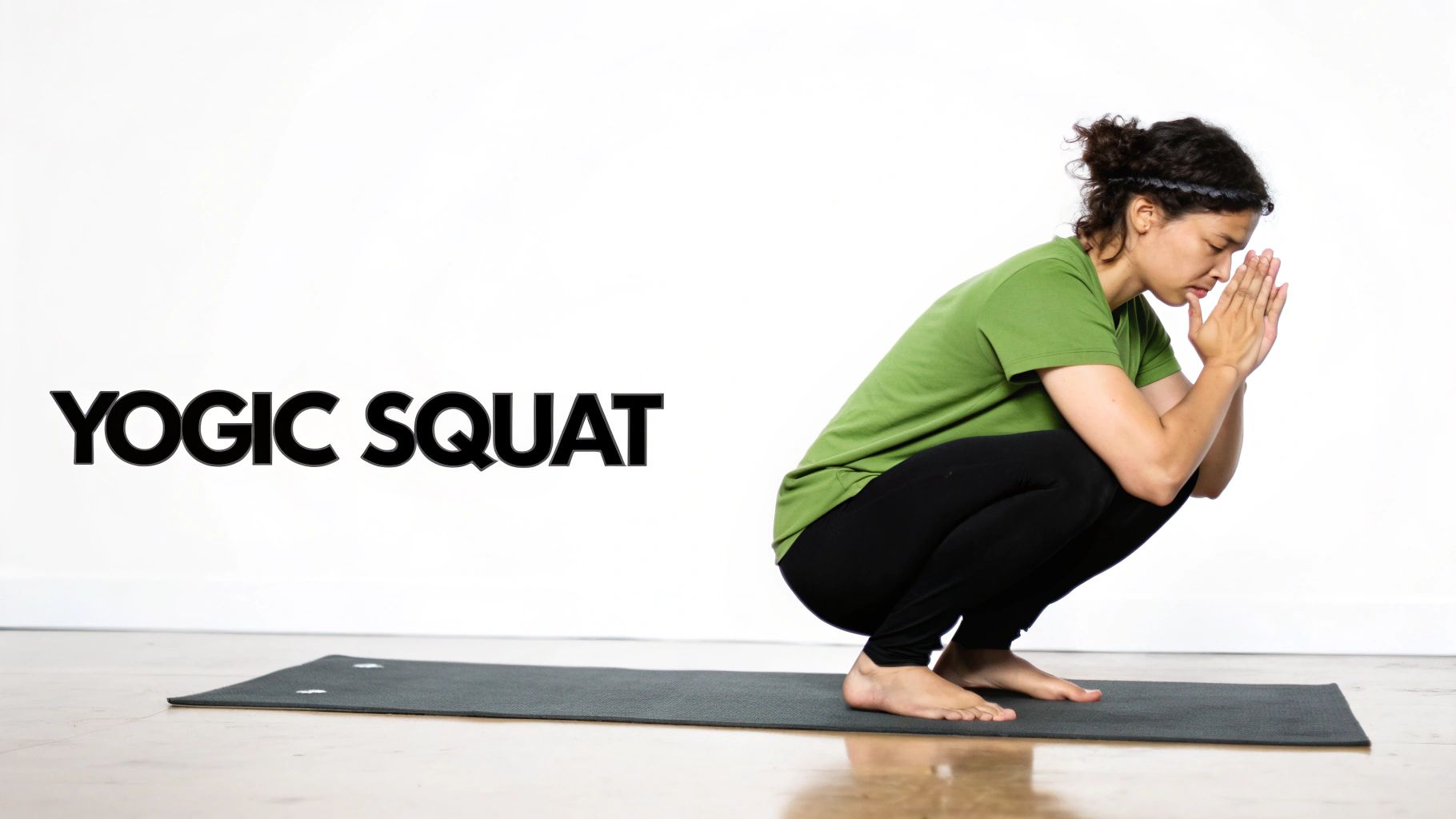
Malasana is a champion of gravity-assisted gut health. The pose aligns the anorectal angle, essentially straightening the final part of the digestive tract to allow for a smoother and more complete release. This makes it particularly effective for anyone dealing with constipation. It's so effective that yoga therapists and prenatal instructors frequently recommend it to support healthy pelvic floor function and encourage regular bowel movements.
Key Insight: This squat doesn’t just help with elimination; it also stimulates the apana vayu, the downward-moving energy in yogic philosophy responsible for excretion. Practicing Malasana helps regulate this energy, promoting overall balance in your digestive and elimination systems.
Ready to get down to business and help things move along? Here’s how to perfect your Yogic Squat:
If stress ties your stomach in knots, Supta Baddha Konasana is the gentle untangler you’ve been looking for. Also known as Reclining Bound Angle Pose, this restorative posture isn't about compression or twisting; it’s about creating space and inviting total relaxation. This pose is a game-changer for digestion because it directly counters the biggest gut-disruptor of them all: stress.
By lying back with the soles of your feet together, you gently open the hips, groin, and abdomen. This subtle stretch releases tension held deep in the pelvic region and allows your abdominal organs to relax, freeing them from the constricting grip of a stressed-out nervous system. It’s like giving your digestive system a permission slip to finally switch from "fight or flight" to "rest and digest."
Supta Baddha Konasana is the ultimate chill pill for your gut. Its power lies in activating the parasympathetic nervous system, the body's internal command center for relaxation and digestion. When this system is engaged, blood flow is redirected to the digestive organs, enzyme production increases, and the smooth, rhythmic contractions of the intestines (peristalsis) can proceed without interruption. It’s one of the best yoga poses for digestion when your tummy troubles are tied to your mental state.
Key Insight: This pose does more than just relax your muscles; it calms your entire being. By quieting the mind and body, you create the ideal internal environment for your digestive system to do its job efficiently and without distress.
Ready to melt away tension and support your gut? Here’s how to sink into this pose for optimal digestive benefits:
You've just navigated a powerful tour of the digestive system's best friends on the yoga mat. From the gentle squeeze of Wind-Relieving Pose to the expansive stretch of Bow Pose, you now have an arsenal of tools to combat bloating, ease constipation, and bring a sense of calm to your core. These aren't just random shapes; they are ancient, targeted movements designed to massage, stimulate, and soothe your internal organs.
The real magic, however, happens when you take these poses off the page and weave them into the fabric of your life. The journey to better digestion isn't about mastering the most complicated twist or holding a pose for an eternity. It's about consistency and mindful attention. Remember, your body speaks a subtle language; learning to listen is the most advanced yoga of all.
Let’s boil it down to the essentials. What are the most important things to remember as you roll out your mat?
Knowledge is great, but action is where the transformation lies. Don't let this list just be another article you've read. Here are some actionable next steps to integrate these poses into your daily routine and truly harness their benefits for better digestion.
Start small and be specific. Commit to a 5-minute "gut health" routine each morning. A simple sequence could be three rounds of Cat-Cow to awaken the spine, followed by a minute in Wind-Relieving Pose on each side, and finishing with a gentle Cobra Pose. That’s it. You’ve kick-started your digestive fire for the day.
Listen to your body’s signals. Feeling bloated after a big meal? Instead of reaching for a pill, try a few minutes in a supported Reclining Bound Angle Pose. Feeling sluggish and constipated? A dynamic flow incorporating Malasana and some gentle twists might be just what you need. The goal is to build an intuitive relationship with your body, using these poses as a responsive toolkit.
Ready to ensure you're getting the most out of every twist and fold? Take the guesswork out of your alignment with Dalm. The AI-powered app provides real-time feedback on your form, helping you perfect the best yoga poses for digestion and track your progress toward a healthier gut. Visit Dalm to start personalizing your practice today.