
The Ultimate Guide to a Cloth Yoga Mat
Picture this: instead of a plastic or rubber surface, your yoga mat is made from natural, breathable fabrics like organic cotton, jute, or hemp. A cloth yoga mat essentially trades that synthetic feel for something that feels more like your most comfortable t-shirt, turning your practice space into a far more organic and skin-friendly sanctuary.
Ever been in the middle of a pose and felt a weird disconnect, like a layer of plastic is separating you from the ground beneath? You're definitely not the only one. There’s a growing wave of yogis who are ditching their sticky, synthetic mats for the authentic, grounded feel of cloth. It’s all about seeking a more natural and mindful connection.
This trend goes deeper than just how the mat feels under your hands and feet. It’s a deliberate choice for personal health and for the planet. A lot of standard yoga mats are made from PVC and other synthetics, which can sometimes come with a cocktail of chemicals. Switching to a mat made from natural fibers is a simple way to clean up your practice space and align it with your clean-living intentions. This kind of choice is a perfect example of true mindful movement, where every little detail—right down to your mat—supports your overall well-being.
The market is reflecting this shift in a big way. The global yoga mat market was a whopping USD 13.67 billion in 2023, and a huge chunk of that growth is coming from people demanding sustainable options. Cloth mats aren't just a tiny niche anymore; they're claiming up to 20% of sales in eco-conscious markets and have surpassed the USD 2 billion mark globally. Yogis are actively searching for options that are hypoallergenic, non-toxic, and, let's be honest, super easy to clean.
So, what's the big deal? Choosing a cloth mat unlocks a few awesome perks:
Choosing a cloth yoga mat is a bit like picking a dance partner. The material it's made from dictates the whole vibe—how it feels, how it grips, and how it flows with you. Forget the one-size-fits-all world of synthetic mats; diving into fabrics like organic cotton, jute, or hemp is about finding the perfect personality for your practice.
But it’s not just about the threads themselves. The way those threads are woven together is a huge part of the story. A tight, dense weave will feel solid and grounded underfoot, almost like a traditional mat. On the other hand, a looser, fluffier weave creates a much softer, more cushioned experience. It's this beautiful combination of fiber and weave that truly defines your mat.
Think of your favorite, softest t-shirt. Now imagine that comfort stretched out into a yoga mat. That's organic cotton. It's the undisputed champion of comfort, and its secret weapon is its incredible absorbency.
Here's the magic: as you start to sweat, a cotton mat doesn't get slippery. Instead, it soaks up that moisture and uses it to create an even stronger, more secure grip. It’s a game-changer for hot yoga. Plus, it’s exceptionally kind to sensitive skin, grown and processed without all the harsh chemicals you'd rather avoid.
Key Takeaway: Organic cotton is your best friend for a sweaty Vinyasa flow or a Bikram session. The more you sweat, the grippier it gets, turning would-be slips into super-solid poses.
If cotton is the soft, gentle soul of cloth mats, then jute and hemp are its rugged, earthy counterparts. These fibers bring a totally different feel to your practice—a bit more rustic, a bit more raw, and naturally grippy right out of the box.
Both jute and hemp offer a really grounded, tactile experience that helps you feel more connected to the earth beneath you. The unique textures can add a whole new dimension to your practice, letting you craft a truly custom feel. For more ideas on making your mat your own, check out our guide to creating personalized yoga mats. Ultimately, choosing between these natural fibers isn't just about performance; it's about finding a mat that truly vibes with your personal wellness philosophy.
Alright, let's settle the great debate: the earthy, absorbent cloth mat versus the classic, grippy traditional mat. Choosing your yoga surface is a big deal. It’s not just about picking a pretty color; it's about finding a true partner for your practice. This isn't your standard pros-and-cons list. We're putting them head-to-head to see which one really vibes with your flow.
Picture this: you're deep in a heated Vinyasa class. The temperature is rising, and suddenly your trusty PVC mat feels more like a slip-n-slide. Your Downward Dog is slowly, but surely, becoming a downward slide. This is exactly where a cloth yoga mat changes the game. Its natural fibers, like cotton or hemp, actually use your sweat, creating an even stronger grip the more you perspirer.
Now, flip the scenario. Imagine a mellow Yin or restorative class where you're holding poses for what feels like an eternity. A traditional mat made from rubber or TPE often wins on the cushion front, giving your knees and wrists that plush, forgiving support. For some yogis, that extra padding is non-negotiable.
Let's break down this mat-to-mat battle so you can see which one comes out on top for you.
This table cuts right to the chase, highlighting the key differences between these two yoga mat philosophies.
Ultimately, there's no single "winner" here. It all boils down to your personal practice, your body's needs, and what makes you feel the most supported and stable on the mat.
The real magic—or mayhem—happens when moisture enters the picture. A traditional mat gives you that satisfying, tacky grip right out of the gate. But as soon as you start to sweat, that reliability can take a nosedive.
A cloth mat is the polar opposite. It might feel a little slick when you first step onto it dry, but its texture truly comes alive with a bit of moisture. This makes it the undisputed champion for hot yoga, powerful Ashtanga flows, or any practice where you know you're going to glisten. For a less intense session, a quick spritz of water from a spray bottle is all it takes to kickstart its grippy superpowers.
The Big Question: Do you need instant grip for a slow-paced practice, or do you need a mat that gets better as you heat up? Your answer will point you straight to your perfect mat.
When it comes to pillowy comfort, traditional mats usually have the edge. Their foamy construction provides a level of shock absorption that a dense, woven cloth yoga mat just can't replicate. Then again, many yogis love the grounded, stable feeling of a cloth mat, saying it helps them connect more deeply with the floor beneath them.
And what about life on the go? Cloth mats are the clear winner here. They're often lighter and can be folded up tight like a blanket, making them a dream for travel or just tossing in a tote bag on your way to the studio. They're basically yoga rugs, built for a nomadic lifestyle.
This growing interest in natural alternatives isn't just a trend; it's part of a bigger shift. The demand for cloth yoga mats is expected to climb by 6.1% annually through 2032, all thanks to a collective desire for more sustainable and mindfully made gear. To put that in perspective, cloth mat sales in Europe alone topped USD 1.5 billion in 2024, proving just how many people are voting for eco-friendly options with their wallets. You can see more on the growing yoga mat market on Coherent Market Insights.
This move toward natural materials isn't just about how a mat performs; it's a conscious choice that aligns the practice with personal values.
This infographic gives you a closer look at the common fibers you'll find in a cloth yoga mat.
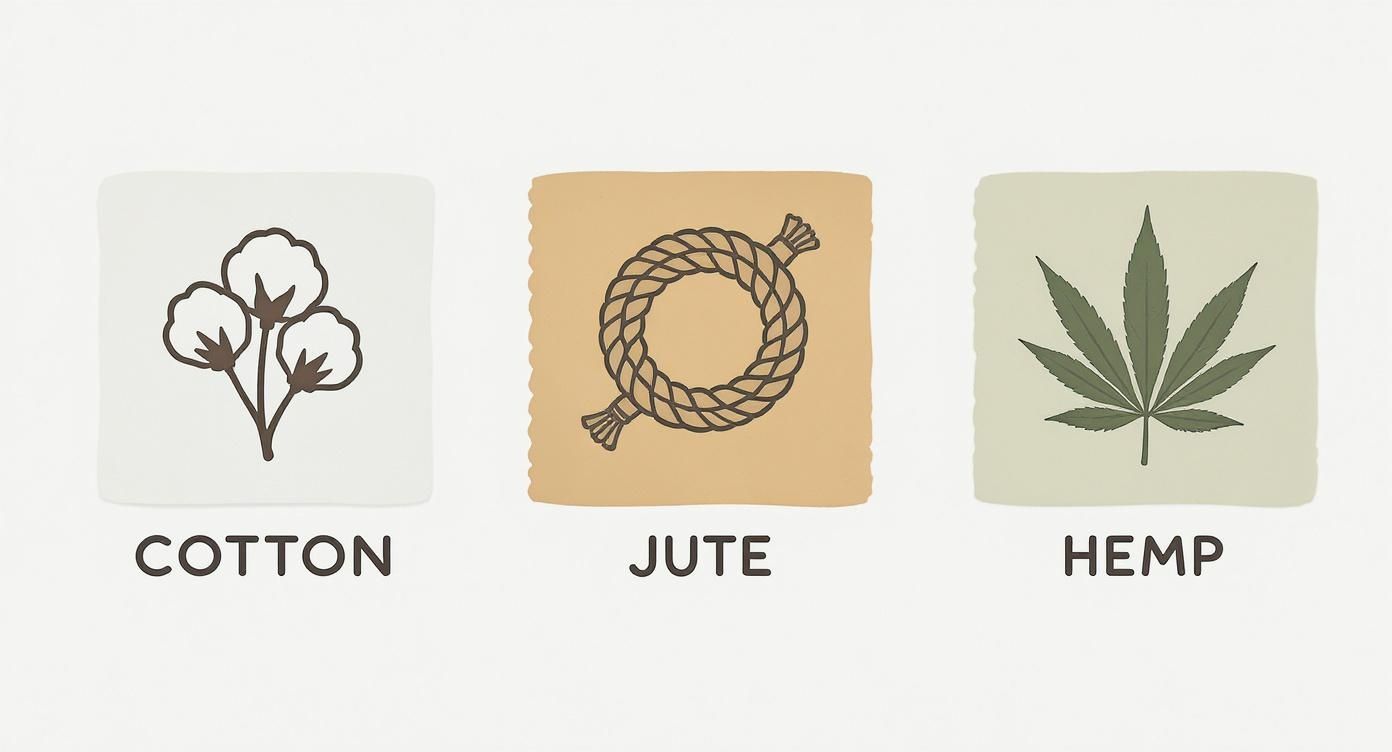
Each material, from soft organic cotton to rugged jute, gives you a totally different feel under your hands and feet—a world away from the uniform texture of most synthetic mats. This variety lets you find a mat that truly feels like yours, much like how you might get personalized feedback with a guide to smart yoga mats. The final decision really just depends on what you value most: grip, comfort, or sustainability.
Alright, let's get you matched up with the perfect cloth yoga mat. Forget finding the one "best" mat on the market—this is about finding the right mat for your practice. It’s a personal quest, just like yoga. To find your soul-mat, we need to look at how its grip, cushioning, size, and eco-friendliness vibe with your flow and your values.
And you're not alone in looking for a more natural option. The global yoga mat industry is a behemoth, valued at a staggering USD 27.36 billion in 2024, and cloth mats are carving out a serious niche. Just in the U.S., cloth mat sales hit around USD 800 million in 2023, grabbing about 18% of the market. This wave is being led by women, who make up over 60% of yogis and are often on the hunt for skin-friendly, natural materials. If you want to dive deeper into the numbers, check out the full yoga mat market research on Maximize Market Research.
First thing's first: the grip on a cloth mat is a different beast altogether. A rubber mat feels sticky right out of the box, but a cloth mat’s superpowers are unlocked by moisture. This makes it an absolute godsend for hot yoga, but it might need a quick spritz of water from a spray bottle to get going in a drier, gentler practice.
Think of it this way: the mat meets you halfway. The harder you sweat and work, the harder it grips for you.
Cushioning is another area where things get interesting. Cloth mats give you a dense, grounded connection to the floor, not a squishy, foam-like bounce. This is a huge win for standing and balancing poses because it creates an incredibly stable foundation.
But, if you have sensitive knees or wrists, you might want to look for a thicker weave or just keep a blanket handy for extra padding in poses like Cat-Cow or any kneeling lunges. It’s all about striking that perfect balance between feeling the earth beneath you and giving your joints some love.
Size absolutely matters on the mat. You need enough space to fully melt into Savasana without your hands and feet dangling off the edges.
Beyond the nitty-gritty dimensions, the look and feel of your mat is a chance to let your personality shine. You can find everything from minimalist, undyed cotton to vibrant, hand-dyed patterns that are practically works of art. Pick something that makes you smile every single time you unroll it.
Pro Tip: Your mat is part of your sacred space. A calming, earthy tone might be just the thing for a restorative session, while a bold, energetic design could give you the visual kick you need to power through a tough vinyasa flow.
Let's be real—one of the biggest draws of a cloth mat is how kind it is to the planet. To make sure you’re making a truly conscious choice, you have to look past the green marketing buzzwords.
Hunt for mats made from 100% organic cotton, hemp, or jute. Look for seals of approval like GOTS (Global Organic Textile Standard), which is a solid guarantee that the material was grown and handled without nasty chemicals.
And don't stop there. Dig into the brand's ethics. Do they champion fair trade? Are their dyeing processes safe for the environment? Choosing a mat from a brand that’s transparent and ethical means your purchase is a vote for a healthier planet and happier people.
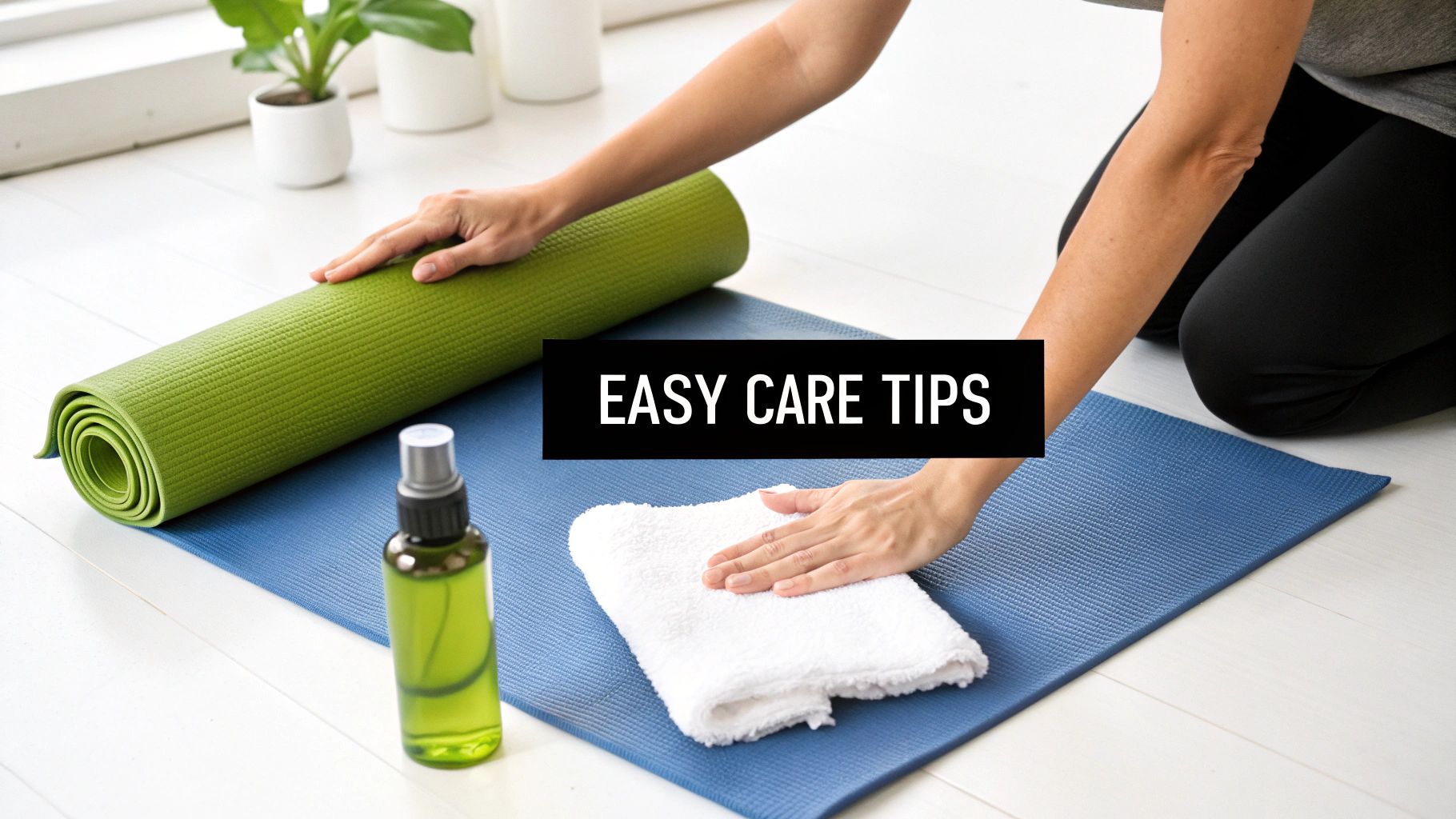
Let’s be honest, one of the best things about a cloth yoga mat is how ridiculously easy it is to clean. No more awkward scrubbing sessions on the floor with weird-smelling sprays. Keeping your cloth mat pristine is basically like doing a load of laundry.
A few simple tricks are all you need to keep it hygienic, grippy, and ready for your next Vinyasa.
For most cotton, hemp, or blended mats, a quick trip through the washing machine is all it takes to banish sweat, dirt, and any lingering bad vibes. It's almost too easy.
Just follow these steps to keep your mat in tip-top shape:
If you're more of a hands-on person or your mat is extra delicate, hand-washing is a great option. Fill a tub with cool water, add a splash of mild soap, give it a gentle swish, rinse well, and hang it up to dry. Done.
You definitely don't need to machine wash your mat after every single practice. For daily maintenance, a simple DIY mat spray is your secret weapon. It keeps things fresh and clean between those deeper washes.
My go-to recipe is a little witch hazel, water, and a few drops of tea tree and lavender essential oils. Tea tree oil is a natural powerhouse for cleaning, and the lavender just makes everything smell amazing and calm.
After you practice, just give your cloth yoga mat a light spritz, wipe it down with a damp cloth, and let it air dry completely before you roll it up. This little two-minute ritual prevents any grimy buildup and keeps your practice space feeling sacred and inviting.
Thinking about trading in your trusty rubber mat for something a little different? It’s a big step, and you probably have a few questions swirling around. Let's clear up the common curiosities and get you ready to flow on fabric.
This is the big one, and the answer is what makes these mats so cool. Straight out of the box and completely dry, a cloth mat might feel a bit less sticky than what you’re used to. But the secret ingredient is a little bit of moisture.
The grip on a cloth yoga mat actually gets better the more you sweat. It's designed to work with you.
For beginners or anyone in a less-sweaty practice, there's a super simple hack: just give the spots for your hands and feet a light spritz with a water bottle. Boom. Instant grip, giving you a solid foundation right from your first Downward Dog. It’s a tiny tweak that changes everything.
Cloth mats offer a different kind of support. Forget that squishy, bouncy feeling of foam; this is all about a firm, grounded connection to the floor. It’s a game-changer for stability in balancing poses, but it's definitely less "pillowy" than a thick PVC or rubber mat.
Here's the deal: If you have sensitive knees or wrists, you don’t have to choose. Just lay your cloth mat right on top of your old standard mat. You get the best of both worlds—the grip and feel of fabric with the cushion you need. Or, just keep a folded blanket handy to slide under your joints whenever you need a little extra love.
Treat your mat just like you treat your favorite workout gear. The cleaning schedule totally depends on your practice style. If you’re doing a gentle, daily flow, washing it once a week is perfect for keeping it fresh.
On the other hand, if you're a hot yoga devotee or just sweat a lot, you'll want to toss it in the wash after every session or two. This is where cloth mats totally win. No more awkward scrubbing in the bathtub—just throw it in the machine. Keeping your practice space clean has never been easier.
Ready to see what a smarter, more supportive practice feels like? The Dalm app uses medical-grade AI to give you real-time feedback on your form, helping you build a safer, stronger, and more mindful yoga practice right from home. Discover your personalized yoga journey with Dalm today.