
Your Guide to a Daily Yoga Workout
Thinking about a daily yoga workout might conjure images of intense, hour-long sessions, but that’s not what this is about. A daily practice is all about sustainability—weaving yoga into the fabric of your life with a focus on just showing up, consistently. Even 15 minutes a day can make a world of difference for your strength, mental game, and overall vibe.
Let's get one thing straight: you don't need to be a super-flexible guru to get the life-changing benefits of yoga. Building a daily yoga habit is one of the smartest, most approachable things you can do for your body and mind. It’s not about twisting into a human pretzel; it’s about creating a realistic routine that delivers results you can actually feel.
The real magic is in the consistency. A little bit of dedicated practice each day starts to stack up, creating a powerful ripple effect through every part of your life. Imagine rolling out of bed feeling centered and energized instead of groggy and stressed. That’s the kind of immediate win you get from just rolling out your mat.
A lot of people find their way to the mat for the physical perks, and don't get me wrong, they're awesome. A regular practice builds real, functional strength, helps undo the damage of slouching over a desk all day, and brings back flexibility you thought was long gone.
But the real transformation? That happens on the inside. A daily yoga workout carves out a non-negotiable space to unplug from the world and plug back into yourself.
A daily yoga practice isn’t about nailing a perfect pose. It’s about the simple, powerful act of showing up for yourself. It's a commitment that pays you back with more energy, clarity, and resilience.
This isn't some niche spiritual thing anymore; yoga has officially hit the mainstream wellness scene in a big way. The global yoga industry is on track to hit a staggering $200 billion by 2030, and you can find classes in over 90% of gyms in the U.S. alone. That kind of explosive growth tells you one thing: this stuff works.
What's beautiful about a daily routine is how easy it is to start. You don't need a bougie studio or a pile of expensive gear. The most important tool you have is the habit itself—one that feels good and actually fits into your life.
By bringing the principles of https://blog.dalm.co/yoga-in-daily-life into your schedule, you're laying the groundwork for a healthier, happier you. This simple, consistent act of self-care will completely change how you move, think, and feel. Every single day.
Ever tried to have a serious conversation the second you roll out of bed? It’s awkward, clunky, and nothing really connects. Well, jumping into a workout with cold muscles is pretty much the same deal—it’s just not going to flow.
That's where this quick warm-up comes in. Think of it as your secret weapon, a gentle nudge that tells your body it's time to wake up and get ready for the awesome yoga session you have planned. This isn't about pushing your limits; it's about creating a little space, getting your joints moving, and just saying hello to your breath.
Let’s start on your hands and knees for a few rounds of Cat-Cow. When you breathe in, let your belly drop and look up, feeling that nice curve in your back. As you breathe out, round your spine up like a Halloween cat, tuck your chin, and really press the mat away. This one move is magic for waking up your entire spine.
Now, pop into a comfy seated position for a gentle spinal twist. Sit up tall, put one hand behind you for support, and bring the other hand to your opposite knee. Gently twist from your middle, not your neck. Don't crank yourself into it; just breathe and let the rotation happen. You’ll feel that tension in your back start to melt away.
A warm-up isn't just about ticking boxes. It's an invitation. It’s you telling your mind and body, "Hey, let's get on the mat together." It’s the handshake before the main event, setting the stage for a much better practice.
Before you finish, show your wrists and ankles some love. These little guys do a ton of work in poses like Downward-Facing Dog, so give them a few gentle circles in both directions. It’s a small thing that makes a huge difference.
This little routine is all it takes to get your body primed, slash your risk of injury, and make your entire workout feel so much smoother. If you want to explore more ways to get ready, check out our complete guide to yoga warm-up exercises. By the end of these five minutes, you'll feel centered, awake, and ready to flow.
Alright, enough talk. Let's get on the mat. This is where the real magic happens. I've put together three grab-and-go blueprints for a daily yoga workout, so you can stop scrolling and start flowing, no matter what your day throws at you.
Forget searching for the "perfect" sequence. Whether you're squeezing in a session between meetings or have a luxurious 45 minutes to yourself, there's a complete, balanced routine here for you. Think of each one as a mini-journey to build strength, find more flexibility, and get your head on straight.
Feeling overwhelmed? Use this little cheat sheet to pick the perfect sequence for your mood and schedule.
Pick one that feels right for today, and remember: you can always come back and try another tomorrow.
Pressed for time? This one's for you. Think of it as a shot of espresso for your body, but without the jitters. It’s a quick, dynamic flow designed to shake off the cobwebs and get you moving in record time.
We'll focus on linking breath to movement, creating a rhythm that gently gets your heart rate up and your energy flowing. You'll move through foundational poses like a series of Sun Salutations and a powerful Warrior sequence.
A daily yoga workout doesn’t have to be some epic, hour-long saga. A focused, intentional 15 minutes can completely shift the energy of your entire day. The real secret is consistency, not duration.
This is all about smart, efficient movement. For example, when you hit Chaturanga, you can always drop your knees to the mat. This protects your shoulders while still building serious arm strength. It’s about making the practice work for your body, right here, right now.
This quick warm-up sequence shows how simple movements, when linked together, can be incredibly effective.
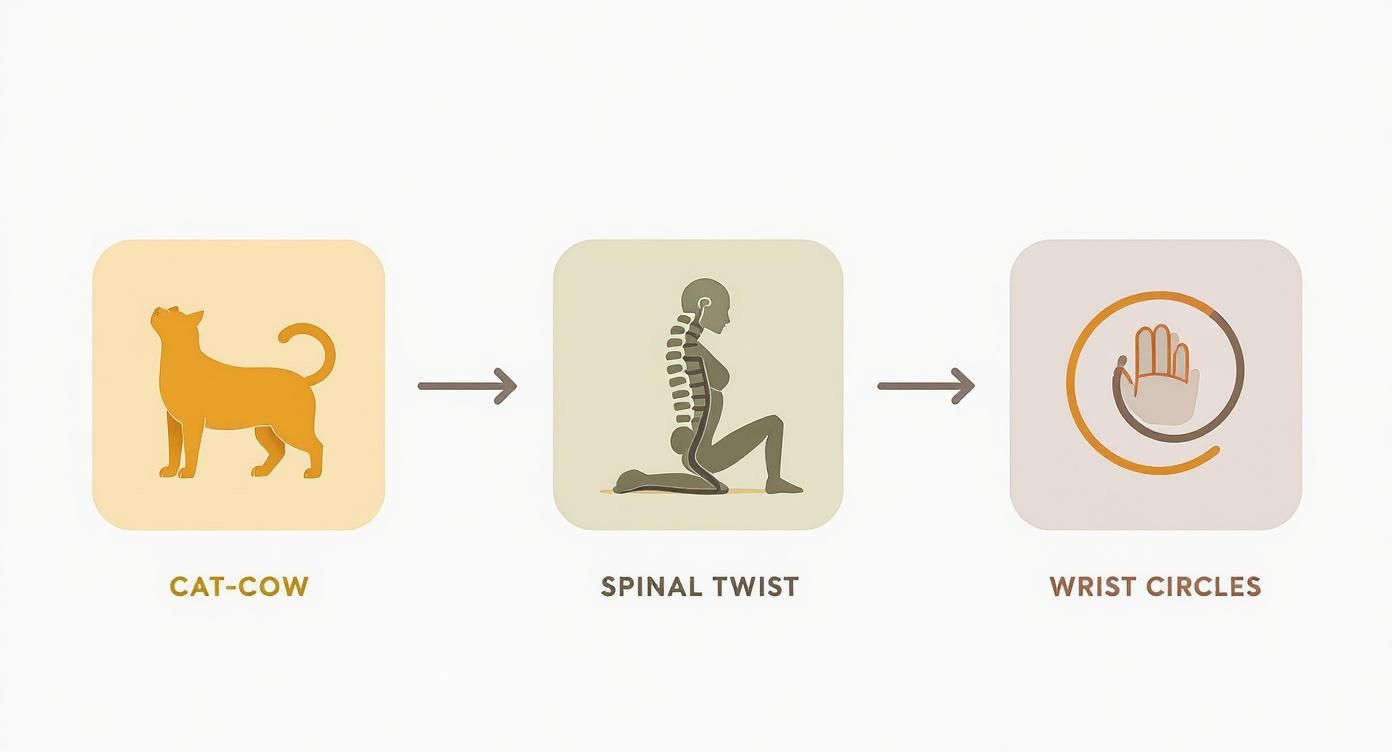
Here, we're simply moving from Cat-Cow to a gentle Spinal Twist and then adding some Wrist Circles to get the body ready for whatever comes next.
Got a little more breathing room in your schedule? The 30-minute flow is that perfect sweet spot. It gives you enough time to warm up properly, explore poses a bit more deeply, and finish with some delicious, well-deserved stretches.
This sequence is all about finding that balance between effort and ease. You’ll hold poses for a few extra breaths, which gives you a chance to really fine-tune your alignment and build both strength and stability. Expect a solid standing series, some core work, and gentle backbends before winding down.
Imagine you're in Warrior II. With that extra time, you can really check in. Are your hips open? Is your front knee tracking safely over your ankle? This is where you build the muscle memory and true strength that carries you off the mat.
When you’re ready for a more immersive practice, the 45-minute deep dive is your ticket. This extended session allows for a much more meditative pace, giving you plenty of time to play with more challenging poses and—best of all—enjoy a longer, more luxurious Savasana.
This workout is perfect for a weekend or a day when you just need to hit the reset button, hard. You'll move through a more creative flow that might include balancing poses like Eagle or Tree, deeper hip openers like Pigeon, and maybe even some prep for an inversion or two.
That extra time is what lets you fully connect your mind, body, and breath, leaving you feeling completely refreshed and renewed from the inside out.
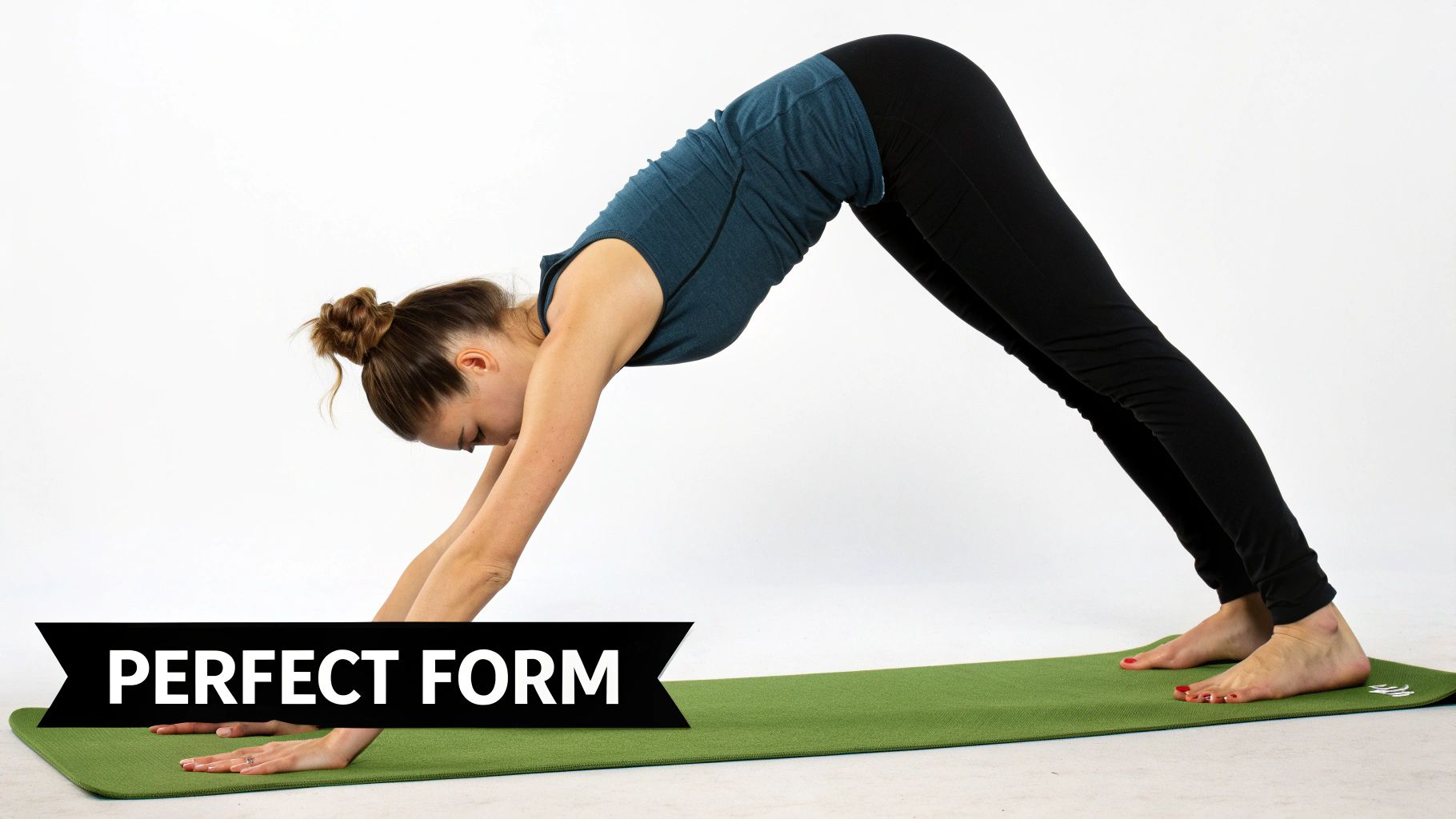
Here's a secret: perfect form in yoga isn’t about contorting yourself into a pretzel for an Instagram post. It's all about making the practice feel good, safe, and wildly effective. Think of good alignment as the secret sauce—it turns a wobbly, maybe-I'll-pull-something session into a seriously powerful flow.
When you really get your alignment right, you’re doing more than just protecting your joints. You're waking up the right muscles, and that’s how you build real strength and stability. Let's dig into a few classic poses and the sneaky little habits that can trip us up.
Ah, Downward-Facing Dog. It's the bread and butter of most yoga practices, but it's also where bad habits love to take root. The number one mistake I see? A rounded back that looks more like a sad camel than a strong, inverted 'V'. So many people get fixated on slamming their heels to the floor that they completely forget about their spine.
The fix is surprisingly simple: bend your knees. A lot! This one little tweak gives your hips the freedom to tilt up toward the sky, creating a gorgeous, long line all the way from your hands to your tailbone. Focus on pressing the floor away from you and melting your heart back toward your thighs.
Once you’ve found that length, then you can play with gently pedaling out your feet, inching your heels toward the mat without sacrificing that beautiful spine.
Good alignment isn't about hitting some "perfect" shape. It’s about having a conversation with your body and finding what feels both safe and challenging for you today. Listen, don't command.
Okay, let's talk Warrior II. The biggest party foul here is letting that front knee collapse inward. It puts a ton of funky pressure on the joint. Instead, make it your mission to actively guide your front knee toward the pinky-toe side of your foot. Glance down—you should be able to see your big toe just to the inside of your knee.
Another classic? The shoulder-earrings. We all do it! But in Warrior II, let your shoulders melt down and away from your ears. Create space. This little shift keeps the power where it belongs: in your legs and core, not in your tense neck.
And finally, the mighty Plank. The most common pitfall is either letting the hips droop toward the floor or hiking them up to the sky. Either way, you're letting your core off the hook! Imagine a super-strong, straight line of energy from the top of your head all the way to your heels. Engage your core like you mean it—pull your belly button in toward your spine—to keep those hips perfectly aligned with your shoulders. This tiny adjustment turns a boring hold into a full-body power move, making every single second on the mat count.
Ever wish you had a yoga instructor in your pocket, ready to whisper alignment cues in your ear whenever you needed them? What if you could get that expert eye on your form without ever leaving your living room?
That’s not some far-off fantasy anymore. It's happening right now with AI-powered yoga.
Imagine this: You roll out your mat, prop up your phone, and flow into Warrior II. Just as you settle in, a calm voice offers a gentle nudge: "Drop your shoulders away from your ears." This isn't magic—it’s AI pose analysis in action. Using your device's camera as its "eyes," the software intelligently analyzes your body's alignment in real time.
This tech is a huge deal for anyone practicing at home. It closes the gap between a solo session filled with guesswork and an expensive private class, helping you build strong, safe habits from the very first day.
We all have that one pose that just doesn't feel right. Maybe it’s a wobbly Triangle Pose or a Chaturanga where your elbows insist on flaring out. AI gives you the immediate, unbiased feedback needed to pinpoint exactly what's going on.
Here’s what that looks like in a real-world flow:
This isn't just about getting corrected. It’s about creating a deeper conversation with your own body, learning its unique quirks and unlocking its potential.
This kind of personalized guidance makes your daily yoga workout so much smarter. Instead of just hoping you’re doing a pose correctly, you get instant confirmation. That builds confidence and helps you progress faster and more safely than you might on your own.
If you want to geek out on how this all works, Dalm’s guide on posture analysis software is a great place to start.
Ultimately, using AI in your practice is like having a compassionate and incredibly precise coach dedicated to your yoga journey. It removes the guesswork and empowers you to build a practice that’s not just consistent, but also technically solid and deeply fulfilling.
Starting a daily yoga practice is exciting. The real challenge, though? Showing up on day 17, when you're tired, busy, and the novelty has worn off. The secret isn't about finding some hidden reserve of discipline. It’s about being clever and making your practice a non-negotiable part of your day.
The easiest trick in the book for this is something called habit stacking. Instead of trying to magically create a new 30-minute time slot out of thin air, you just hitch your yoga session onto something you already do every single day without fail.
Think of it this way:
This little mind trick is surprisingly powerful. It takes the "should I or shouldn't I?" debate out of your head. Your existing habit becomes the trigger, and before you know it, yoga is just what you do next.
Let's be real: some days, motivation will be nonexistent. On those days, tangible proof of your progress is what will get you on the mat. When you can actually see how far you've come, it's a huge boost.
This is where a good tracking tool changes everything. Instead of just feeling like you're getting stronger, you can see the data that proves it. With Dalm’s progress tracking, for example, you can watch your skills improve over time in black and white.
It's one thing to feel a little less wobbly in Tree Pose. It's another to see a chart showing your average balance time has shot up by 30 seconds over the last month. That's not just a feeling; it's a fact. And it feels awesome.
This kind of feedback turns your practice into an engaging journey. You’re not just going through the motions; you're actively leveling up. Seeing those small wins stack up provides the fuel you need to keep showing up, especially on the days you’d rather just crash on the couch. You're building a better you, and you've got the receipts to prove it.
It’s totally normal to have a few questions swirling around before you commit to rolling out your mat every day. Let's tackle some of the big ones so you can get started with confidence. Don't let uncertainty become an excuse!
Look, consistency is fantastic, but your body thrives on variety. Think of it like your diet—you wouldn't eat the same meal every day, right?
Doing the exact same yoga flow day-in and day-out can lead to a plateau, where you stop seeing progress. Worse, it can cause repetitive stress on certain joints. The real magic happens when you mix it up. Maybe go for a fiery, energetic vinyasa flow on Monday and then treat yourself to a gentle, restorative session on Tuesday.
The most advanced yoga you can practice is simply listening to what your body is asking for on any given day.
Honestly? Not much. The only thing you absolutely, positively need is yourself.
Sure, a good yoga mat is a game-changer for grip and a bit of cushion, but you can totally start on a rug or carpet. As you get more into it, you might find props like blocks or a strap become helpful friends, allowing you to go deeper or find better alignment in certain poses. But are they essential from day one? Nope. Don't let a shopping list stop you from starting.
Ready to stop guessing if you're doing it right and start flowing with perfect form? Dalm uses AI to give you real-time feedback on your alignment, essentially turning your living room into a private yoga studio. You can finally see your progress and discover your true potential with medical-grade precision tracking at Dalm.co.