
How to Fix Poor Posture and Stand Tall Again
Let's be real for a moment. You’re probably reading this hunched over your phone or slouched at your desk. It’s the default setting for modern life. Consider this your friendly intervention.
Fixing that posture isn't about being ramrod straight all day—that’s a myth. It’s about retraining your body to find its natural, balanced alignment. We're going to tackle this with a mix of smart awareness, targeted exercises, and a few simple tweaks to your surroundings.
Before we jump into the "how-to," let's get clear on what "good posture" actually means. It’s not about military-style rigidity.
Think of it as a dynamic state where your joints are stacked efficiently, taking the strain off your muscles and ligaments. Your head should float comfortably over your shoulders, which should align right over your hips. It’s all about balance and ease, not tension.
If you feel like everyone is slouching, you're not wrong. Our screen-centric, sedentary lives have created a global posture problem. In the United States alone, nearly 30% of the population dealt with lower back pain and spinal issues in 2024. The root cause? Our daily habits. We spend hours weakening our core muscles and straining our spines without even realizing it. You can dig deeper into this trend and its impact over at Archive Market Research.
The usual suspects are habits so ingrained we barely notice them:
The real kicker is that poor posture isn't just about how you look. It's the silent architect behind nagging back pain, relentless tension headaches, that feeling of being tired all the time, and even shallow breathing.
Alright, before you can fix the problem, you need to know where you stand—literally. Here's a super simple diagnostic you can do right now to get a baseline of your current alignment. It takes less than a minute and will show you exactly what needs work.
Here's how to do the "wall test":
Use this simple wall test to quickly assess your current postural alignment and identify areas for improvement.
This isn’t a test you can fail. It's just a way to gather some intel. Now you have a starting point and a clearer picture of which areas need a little extra love and attention. Let's get to it.
Forget the idea that you need an hour at the gym to fix your posture. Who has time for that? The real secret is consistency, not intensity. All you need is 15 minutes a day to create a powerful habit that starts unwinding the damage from all that sitting, scrolling, and slouching.
Think of this routine as hitting a reset button for your spine. It's a quick, simple way to gently guide your body back to its natural, pain-free alignment.
Let's get to it. To get you standing tall again, we need to do two things: wake up the sleepy muscles that are supposed to be holding you up and stretch out the tight ones that are constantly pulling you forward. These three moves are the biggest bang for your buck.
Before you start, it's a good idea to get a quick snapshot of where you're at. This little self-check helps you become way more aware of how you're holding yourself.
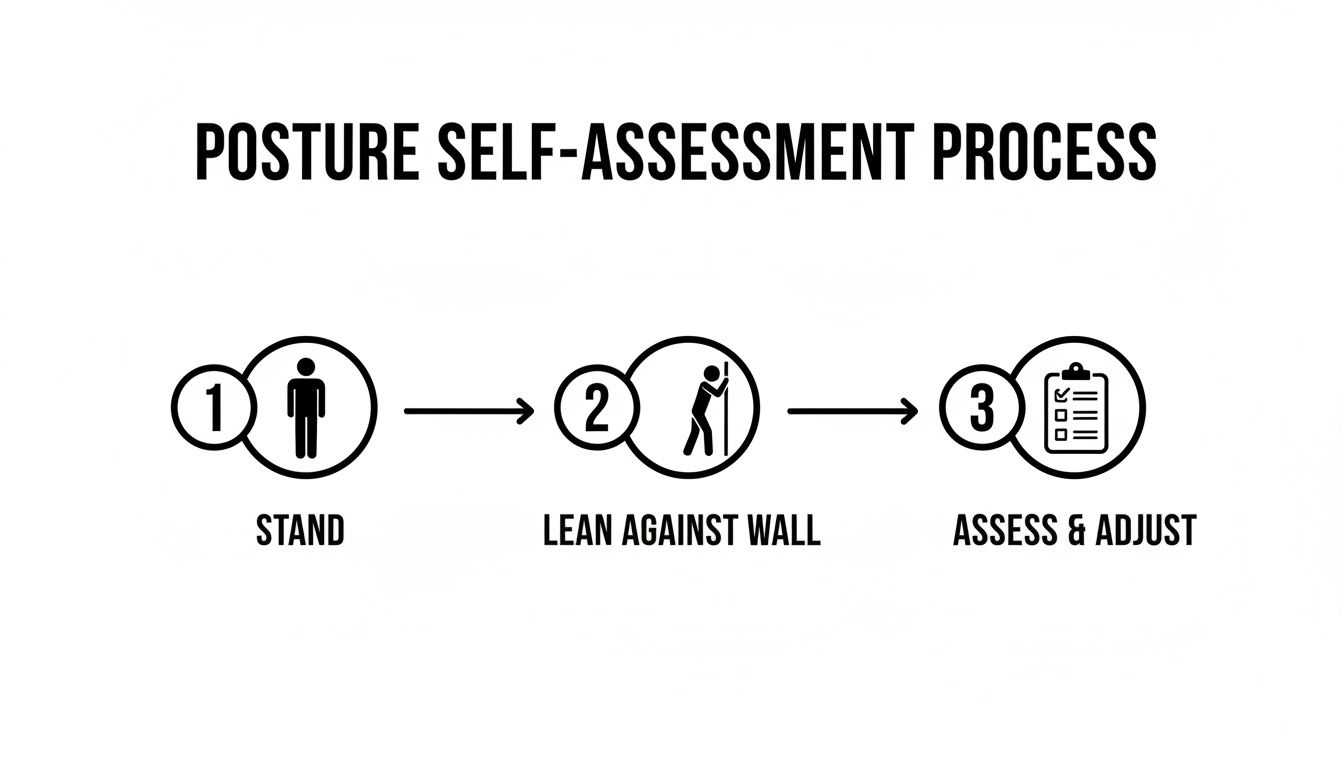
This gives you a mental baseline, so you can actually feel the difference as you make progress.
A quick word of advice: slow down. The goal here is mindful movement, not blasting through reps. Quality over quantity will retrain your body much faster. Really focus on the squeeze and the stretch.
Okay, you’ve activated the right muscles. Now it's time to release the tight ones that are pulling you into that familiar slump. These two stretches are your new best friends.
Doorway Pec Stretch
Hunching over a keyboard makes your chest muscles incredibly tight, which pulls your shoulders forward. This stretch is the perfect antidote.
Thoracic Spine Extensions
This move is fantastic for undoing that "C-shape" your upper back gets from sitting. All you need is a foam roller or even just a rolled-up towel.
Weaving these exercises and stretches into a daily 15-minute habit will make a huge difference. You're not just working out; you're building a better relationship with your body. To take this even further, check out our guide on postural awareness exercises. That's where you learn to make good posture an automatic habit, not just something you do for 15 minutes a day.
Let's be real: you can do all the stretches in the world, but if you spend your day in an environment that’s actively wrecking your posture, you're fighting a losing battle. Your surroundings are constantly nudging you into certain positions. The trick is to make those nudges work for you, turning spine-crushing slumps into spine-supporting alignments without you even thinking about it.
The main culprit for most of us? The workspace. If you're at a desk for hours on end, that setup is either an ergonomic paradise or a back-pain factory. There's really no in-between. Considering the average office worker spends a whopping 1,700 hours per year staring at a computer, your desk is ground zero for fixing your posture.
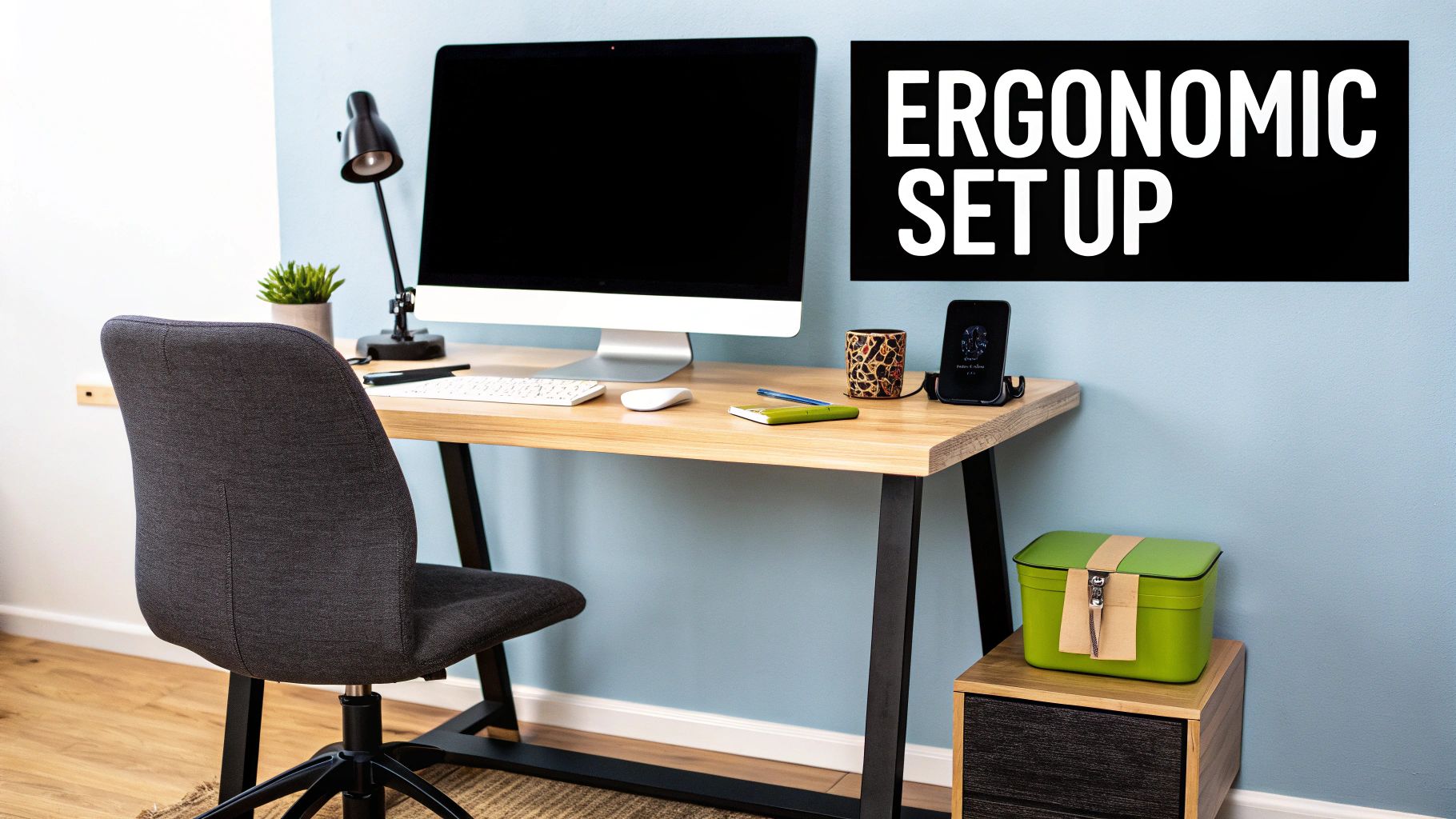
Turning your desk from a back-breaker into a spine-saver is way easier than it sounds. It’s all about getting your angles right so your body can finally chill out in a neutral, relaxed position.
Here are the non-negotiable rules for an ergonomic win:
These aren't just about comfort; they're about physics. You're aligning your body to work with gravity, not constantly fight against it.
The fight for a healthy spine doesn't stop when you log off. Your habits at home, in the car, and even while you sleep are just as important. Let's re-engineer these other parts of your life for total spinal success.
This little table is your cheat sheet for optimizing your daily environments. Think of it as a quick-reference guide for a healthier spine, no matter where you are.
Making these small, strategic tweaks across your daily life creates an ecosystem that passively and persistently encourages a happier, healthier spine.
In the Car: Your daily commute can be a postural minefield. Adjust your seat so your knees are level with or just below your hips, and make sure you're sitting all the way back. A small lumbar pillow or even a rolled-up towel can be a game-changer for supporting your lower back's natural curve.
On the Couch: Binge-watching your favorite series shouldn't come with a side of back pain. Stop sprawling into a C-shape! Sit back against the cushions and strategically place pillows to support your lower back and neck.
Here's a pro tip I give everyone: Stop treating your living room like a second office. Working from the couch is one of the fastest ways to absolutely sabotage your posture. If you work from home, you need a dedicated, ergonomic space. End of story.
While You Sleep: You spend about a third of your life in bed, so how you sleep matters. A lot.
And speaking of pillows, yours is a critical piece of the puzzle. It should support the natural curve of your neck, keeping it perfectly aligned with the rest of your spine. A pillow that’s too high or too flat can throw everything out of whack overnight.
Finally, you can bring this same supportive mindset to your workouts. We've got some great ideas in our guide to smart home gym equipment that can help reinforce good posture while you exercise.
Knowing the right exercises and ergonomic setups is fantastic, but that’s only half the battle. The real challenge—and where most people fall off the wagon—is turning those conscious efforts into unconscious, automatic habits. Let’s be real, nobody has the mental energy to think "shoulders back, core tight" all day long.
The secret isn't about brute-force willpower; it's about strategy. You have to trick your brain into making good posture the new default setting. We’ll dive into some simple but powerful psychological tricks to make your new upright habits stick like glue.
This is about building a system so you don't have to rely on remembering. It's about making good posture inevitable.
The easiest way to build a new habit is to latch it onto an existing one. This clever little trick is called habit stacking. Instead of trying to invent a new routine from scratch, you piggyback on something you already do without a second thought.
Take your morning coffee, for instance. That’s a non-negotiable ritual for most of us, and it’s a golden opportunity.
By tying these micro-adjustments to your caffeine ritual, you're wiring them directly into your brain. The coffee becomes the trigger, and before you know it, you'll be doing your posture resets on autopilot.
Your environment is an incredibly powerful tool for changing your behavior. You can strategically plant little reminders, or "postural triggers," throughout your day to gently nudge you back into alignment before you even realize you’re slumping.
Here are a few ideas I've seen work wonders:
These aren't meant to be annoying interruptions. Think of them as friendly taps on the shoulder from your future, pain-free self. They break the cycle of mindless slouching and rebuild your awareness.
Let's be honest, our screens helped get us into this mess, so it's only fair they help get us out. Modern tech can be a fantastic coach, giving you the kind of feedback that turns posture correction into an engaging, almost game-like experience.
With a staggering 30% of adults in the USA dealing with back pain, it’s no surprise people are turning to tech. In fact, studies show smart trainers with real-time app feedback can reduce postural deviation by a remarkable 40% in just one month. You can dive deeper into this growing market over at Grand View Research.
A perfect example is using an AI-powered yoga app like Dalm. Instead of just hoping you’re doing a stretch correctly, the app analyzes your form with mind-boggling precision. It gives you real-time voice feedback on your alignment, essentially putting a personal yoga instructor right in your pocket.
This kind of immediate, accurate feedback is crucial for re-educating your muscles. It ensures you’re building the right habits, not just reinforcing bad ones, turning the whole process from a chore into a guided, interactive journey where you can actually see and feel yourself improving.
Look, doing daily exercises and tweaking your workspace are huge wins. Seriously, give yourself a pat on the back. But sometimes, you need to bring in a professional.
Think of it this way: you can learn a lot about fixing your car from YouTube, but when the engine starts making a scary clanking sound, you take it to a mechanic. Self-correction is powerful, but a pro acts like a skilled coach who can spot your blind spots and give you a personalized game plan. Knowing when to make that call isn't a sign of failure—it’s about being smart with your health.
If your posture journey feels like you're running in place, or if new, worrying symptoms start to pop up, it’s time to listen to your body. Certain signs are more than just tight muscles from slouching over a keyboard.
Don't hesitate to book an appointment if you're dealing with any of these:
These symptoms are your body's version of a flashing neon sign saying, "Hey, I need more help than you can give me right now!" Ignoring them can let small issues snowball into much bigger problems.
Navigating the healthcare world can feel like a maze. When it comes to posture, a few different specialists have unique skills to offer. Knowing who does what helps you find the right person for the job.
Here’s a quick rundown of your potential posture-fixing crew:
Okay, so you’ve booked a visit. A little prep work can make a world of difference. Your goal is to walk out of that office with a clear diagnosis and a plan you can actually follow.
Go in armed with information. Be ready to talk about when your symptoms started, what makes them better or worse, and all the self-care stuff you’ve already tried.
And don't be shy! Ask questions like:
By being an active participant, you're not just getting a temporary fix; you're gaining a deeper understanding of your own body. For those who love data, exploring tools like posture analysis software can give you detailed insights you could even share with your therapist. This proactive approach empowers you to make smarter decisions on your path to standing tall and feeling great.
Alright, you’ve been doing the exercises, you’ve tweaked your desk setup, and you're trying to remember not to slouch. But let's be real—the road to better posture is paved with questions.
Let's tackle some of the most common ones that pop up when you start getting serious about this stuff. Consider this your personal posture Q&A session, no holds barred.
This is the big one, isn't it? The million-dollar question. And the answer is a huge YES, but it comes with a reality check. "Permanent" doesn't mean you hit some posture nirvana and can go back to hunching over your phone for eight hours a day without consequences.
Think of it like keeping a plant alive. You can't just water it once and expect it to thrive forever. Good posture is an ongoing practice—a blend of awareness, strength, and mindful habits. The exercises and ergonomic shifts aren't a temporary prescription; they're the new, healthier way you inhabit your body.
The real win isn't locking yourself into some rigid, "perfect" posture. It's building a body that’s so resilient and aware that it naturally returns to a healthy alignment on its own.
The best part? It's almost never too late. Even if you've been rocking the "programmer slouch" for a decade, your body is amazingly adaptable. By consistently firing up the right muscles and loosening the tight ones, you're literally rewriting your muscle memory.
I get it, you want results. While everyone's journey is a bit different, you won't be waiting around forever. Most people start feeling a change within a few weeks. It usually starts with a newfound awareness—you’ll suddenly catch yourself slumping and pull your shoulders back without even thinking about it.
Here’s a rough timeline of what you might expect:
Just remember, consistency beats intensity every single time. A focused 15 minutes a day will do more for you than a heroic two-hour session once a week.
Ah, the siren song of a quick fix! Those strap-on posture correctors that yank your shoulders back can be a useful tool, but only if you think of them as training wheels.
For short bursts, like an hour at your desk, they can be great. They give you that physical nudge, a constant reminder of what better alignment actually feels like.
Here's the catch: relying on a brace long-term is a terrible idea. Why? Because the brace is doing all the work for you. If you wear it all day, your own postural muscles get lazy and weak, making you even more dependent on the device. The goal is to get your own muscles strong enough to do the job without any help.
Oh, absolutely. Poor posture is way more than just a sore back or a stiff neck. When your skeleton is out of whack, it sets off a domino effect that can mess with systems you’d never even connect to your spine.
Check out some of these surprising side effects:
Fixing your posture isn't just about looking better. It’s one of the most powerful things you can do for your overall health and well-being, full stop.
Ready to take the guesswork out of your posture journey? Dalm uses AI-powered pose analysis to give you real-time feedback on your exercises and stretches, ensuring you're building the right habits with medical-grade precision. Stop wondering if you're doing it right and start your path to a healthier spine today at https://dalm.co.