
10 Mind Body Connection Exercises to Harmonize Your Life in 2025
Ever feel like your mind is racing in one direction while your body is just along for the ride? It's a common modern problem. We juggle a dozen tasks, scroll through endless feeds, and completely forget that our mind and body are supposed to be on the same team, not just awkward roommates. This disconnect isn't just a vague feeling; it can be the root of nagging stress, persistent anxiety, and that general sense of being 'off.' The good news? You don't need a month-long silent retreat or a mystical guru to get them reintroduced.
Rebuilding that powerful link is far simpler than you think. The secret lies in specific, intentional practices designed to get your brain and body communicating again. Strengthening this internal dialogue is the ultimate life hack for feeling more grounded, focused, and in control.
This guide cuts straight to the chase, delivering 10 game-changing mind body connection exercises that do exactly that. We'll break down everything from ancient arts like Tai Chi and Yoga to modern therapeutic techniques like the Feldenkrais Method. Get ready to sync up, find your flow, and unlock a calmer, more integrated version of yourself. No fluff, just actionable steps to bridge the gap and reboot your inner self.
Yoga is the undisputed heavyweight champion of mind body connection exercises. It’s an ancient practice that syncs physical postures (asanas) with intentional breathing (pranayama) and a dash of meditation. Think of it as a physical conversation with yourself, where every stretch, pose, and breath deepens your understanding of how your mind and body are intertwined.
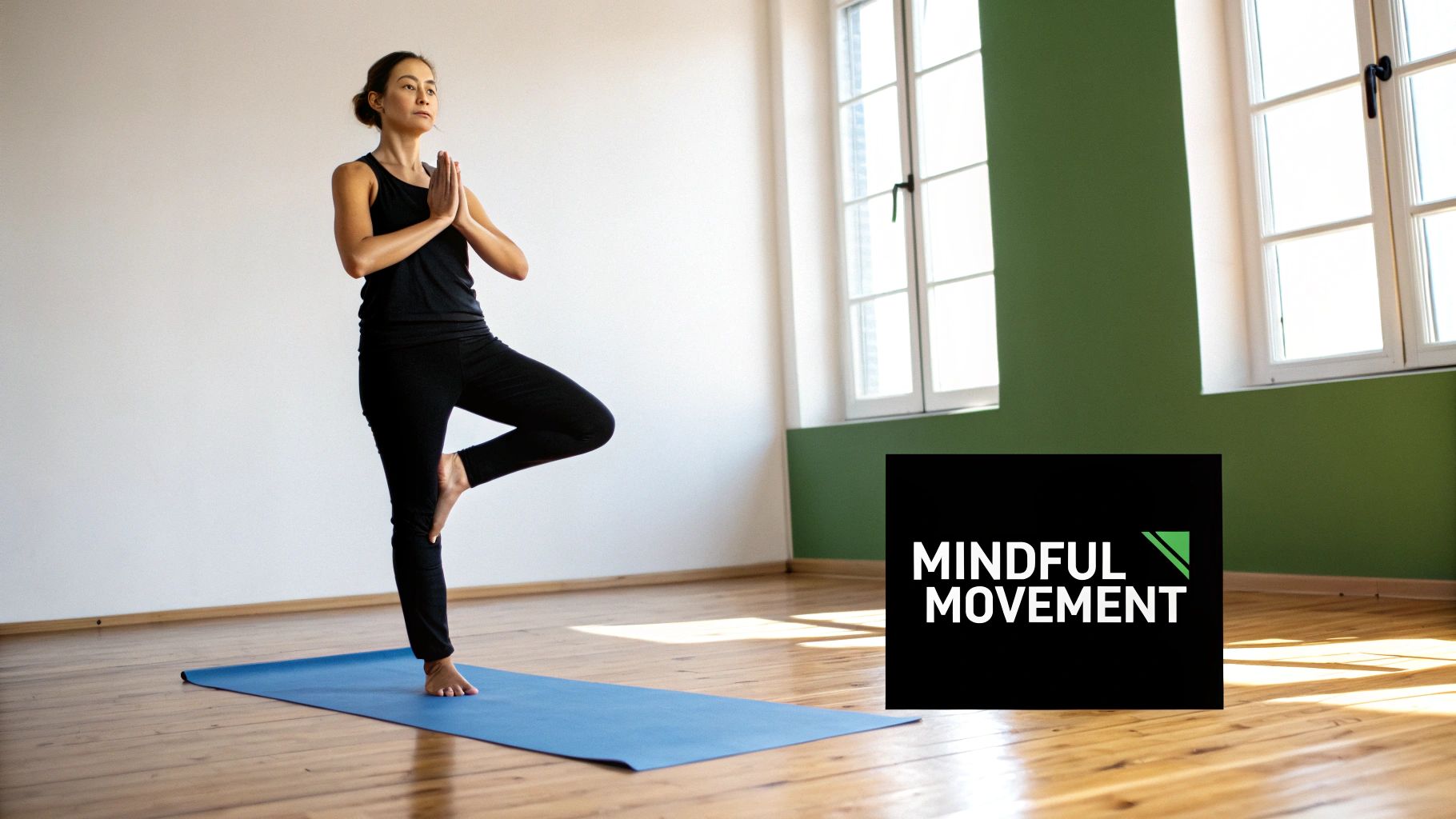
When you hold a challenging pose like Warrior II, you’re not just building muscle; you're training your mind to stay calm and focused under physical stress. This ancient practice has been so effective that its principles are now integrated into corporate wellness programs, physical therapy clinics, and even schools to manage student stress.
Ready to roll out the mat? Getting started is easier than touching your toes (we promise). Here are some tips to begin your journey:
If yoga is the physical conversation, meditation is the quiet listening party for your mind and body. It’s a mental training practice where you focus your attention, often on your breath or a specific sensation, to achieve a state of calm concentration and deep awareness. Think of it as hitting the "mute" button on life's chaos, allowing you to tune into your internal operating system.
This practice isn’t just for monks on mountaintops. Powerhouses like Google use meditation in their "Search Inside Yourself" program to boost employee focus and emotional intelligence. Similarly, the widespread Mindfulness-Based Stress Reduction (MBSR) program, pioneered by Jon Kabat-Zinn, is used in hospitals to help patients manage chronic pain and stress, proving that quieting the mind has profound physical effects.
Ready to find your inner zen? You don't need a special chant or a year-long retreat. Here’s how to start your meditation journey:
Tai Chi, often called "meditation in motion," is a graceful, slow-moving martial art that acts as one of the most profound mind body connection exercises. It involves a series of flowing postures performed in a continuous sequence, synchronized with deep, diaphragmatic breathing. The practice is designed to cultivate and balance the body’s vital energy, or qi, creating a state of relaxed focus and internal harmony.
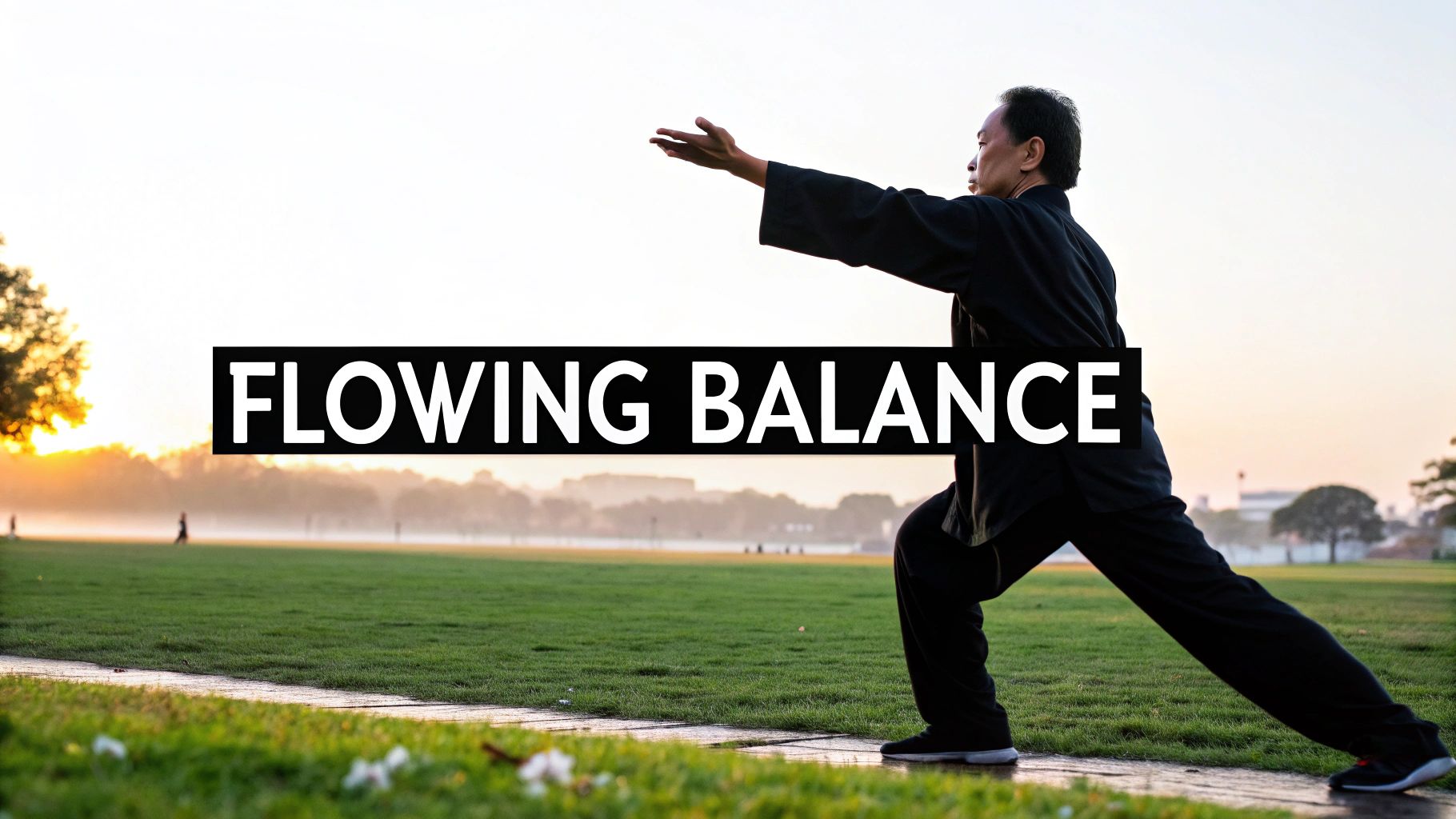
Unlike high-impact workouts, Tai Chi trains your mind to lead your body through gentle, deliberate movements. This mindful control is why senior living communities use it to prevent falls, and why it’s a cornerstone of rehabilitation programs for stroke recovery. It’s a physical practice where the goal isn't just movement, but awareness of the movement itself.
Ready to find your flow? Embracing this ancient art is all about gentle persistence. Here are some tips to start your practice:
If Yoga is the free-flowing poet of mind body connection exercises, Pilates is the meticulous architect. Developed by Joseph Pilates, this system is a masterclass in controlled, precise movements that build core strength, flexibility, and an incredible sense of body awareness. It’s less about spiritual flow and more about the science of movement, demanding your full mental concentration to execute each exercise with precision.
When you perform an exercise like "The Hundred," you are coordinating breath with small, controlled movements, forcing your mind to focus intently on your core engagement and stability. This deep focus is why Pilates is a staple in physical therapy clinics for rehabilitation and among dancers for its ability to build long, lean muscle while preventing injury.
Ready to build a core of steel and a mind to match? Here’s how to dive into the world of Pilates:
If Yoga is the heavyweight champion, Qigong is the wise, flowing grandmaster of mind body connection exercises. This ancient Chinese practice combines gentle, repetitive movements, controlled breathing, and focused intention to cultivate and balance qi, or your vital life force energy. It's less about stretching and more about directing energy, making you feel both grounded and energized simultaneously.
When you perform a sequence like "Lifting the Sky," you’re not just raising your arms; you’re consciously guiding energy through your body to release blockages and promote healing. Its profound impact is why Qigong is integrated into traditional Chinese medicine clinics, modern wellness retreats, and even some cancer recovery programs to support conventional treatments.
Ready to tap into your inner energy? Qigong is exceptionally gentle and accessible for all fitness levels. Here’s how to begin your practice:
Progressive Muscle Relaxation (PMR) is the ultimate "squeeze and release" party for your body. This technique is a hands-on way to understand physical tension by deliberately creating it and then letting it go. You systematically tense specific muscle groups for a few seconds and then release them, teaching your brain to recognize the difference between a stressed state and a relaxed one.
Developed by Dr. Edmund Jacobson in the 1920s, PMR is a powerful tool used in cognitive behavioral therapy to combat anxiety and in sleep clinics to tackle insomnia. It’s even used in military stress training and sports psychology to help athletes manage performance anxiety. By physically releasing tension, you send a direct signal to your nervous system to calm down, making it one of the most direct mind body connection exercises available.
Ready to melt away your tension? Here’s how you can start your PMR practice today:
Dance Movement Therapy (DMT) is less about perfecting your pirouette and more about processing your feelings. It's a psychotherapeutic method that uses dance and movement to integrate your emotional, cognitive, and physical self. Think of it as a conversation where your body does the talking, letting you express complex emotions that words can't always capture.
Pioneered by Marian Chace in the 1940s, DMT is a powerful tool used in mental health clinics to help individuals process trauma and in programs for Parkinson's disease to improve movement and mood. By moving freely, you’re not just exercising; you're unlocking a deeper mind body connection and giving a voice to your inner world in a safe, guided environment.
Ready to let your body lead the way? Engaging with DMT is a unique and deeply personal journey. Here’s how to take your first steps:
If yoga is the heavyweight champion, breathwork is the secret weapon of mind body connection exercises. Known in yoga as pranayama, these techniques involve consciously controlling your breath’s pace, depth, and rhythm. Think of your breath as a remote control for your nervous system; changing the channel from "anxious and overwhelmed" to "calm and centered" is as simple as a few intentional inhales and exhales.
This isn’t just some new-age fad. The U.S. military uses box breathing to keep special forces calm under extreme pressure, and therapists integrate specific breathing patterns to help clients manage anxiety disorders. Modern pioneers like Wim Hof have shown how controlled breathing can influence everything from immune response to athletic performance, proving this ancient practice has serious modern-day power.
Ready to take a deep breath? Harnessing this powerful tool is incredibly accessible. Here’s how to begin your breathwork journey:
If most mind body connection exercises are like a casual chat between your brain and body, MBSR is the eight-week intensive couples therapy that gets them communicating like never before. It’s a highly structured program developed by Jon Kabat-Zinn that combines mindfulness meditation, gentle yoga, and body scan exercises to systematically retrain how you respond to stress.
This isn’t just about feeling a little calmer; it’s a deep dive into observing your thoughts and physical sensations without judgment. The program's success is so profound that it's used in hospitals for chronic pain management and by major corporations like Google to boost employee resilience. It teaches you to stay in the present moment, even when things get tough.
Ready for a mental and emotional transformation? Committing to an MBSR program is a significant step, but the rewards are immense. Here’s how to begin:
The Feldenkrais Method is like a secret decoder ring for your body's movement patterns. It’s a somatic educational system that uses gentle, mindful movements to reprogram your nervous system, helping you find easier and more efficient ways to move. Think of it as a subtle conversation with your brain about how you sit, stand, and walk, leading to profound "aha" moments.
Developed by physicist and martial artist Moshe Feldenkrais, this method isn't about stretching or strengthening. Instead, it’s about increasing awareness to break free from habitual, often inefficient, movements. This unique approach is so effective that it’s used in diverse fields from stroke rehabilitation to optimizing the performance of artists like Barbra Streisand and Sting.
Ready to rethink your movement? Getting started is about curiosity, not exertion. Here are some tips to begin your practice:
We've journeyed through a landscape of powerful practices, from the ancient, flowing movements of Tai Chi and Qigong to the focused core engagement of Pilates. We’ve explored the profound stillness of meditation, the rhythmic release of Dance Movement Therapy, and the subtle yet powerful adjustments of the Feldenkrais Method. Each of these ten disciplines offers a unique pathway back to yourself, proving that the mind-body connection isn't some abstract wellness buzzword; it's a tangible, achievable state of harmony.
The real magic isn't in knowing about these exercises; it's in the doing. It's about feeling the tension melt away during Progressive Muscle Relaxation or discovering the vibrant energy that courses through you with intentional breathwork. You don't need to become an expert in all ten. The goal is simply to start. Pick the one that sparked your curiosity, the one that made you think, "I could try that."
The most crucial lesson from this exploration is that you are a whole, integrated being. Your thoughts impact your posture, your breath influences your anxiety levels, and your physical movements can change your emotional state. Ignoring one part of the equation means you're operating at a fraction of your potential.
By consciously engaging in mind body connection exercises, you are actively rewriting the script of your well-being. You are moving from a state of disconnection, where stress and physical discomfort run the show, to a state of empowered awareness. This is where you find not just relief from symptoms but a deeper sense of control, peace, and vitality.
Feeling inspired but a little overwhelmed? Let's make it simple.
This journey of reconnection is one of the most rewarding you can embark upon. It's a path that leads to greater resilience, deeper self-awareness, and a life lived with more intention and joy. The power to feel more present, grounded, and alive is already within you. All you have to do is take that first step, that first conscious breath, and begin.
Ready to supercharge your yoga practice and perfect your physical alignment to deepen your mind-body connection? The Dalm app uses AI-powered pose analysis to provide real-time feedback, acting as a personal guide on your mat. Refine your form and unlock a more profound practice by visiting Dalm to learn more.