
The Ultimate Guide to Yoga for Desk Workers
Let’s be honest—that fancy ergonomic chair isn’t the miracle worker you were hoping for, is it?
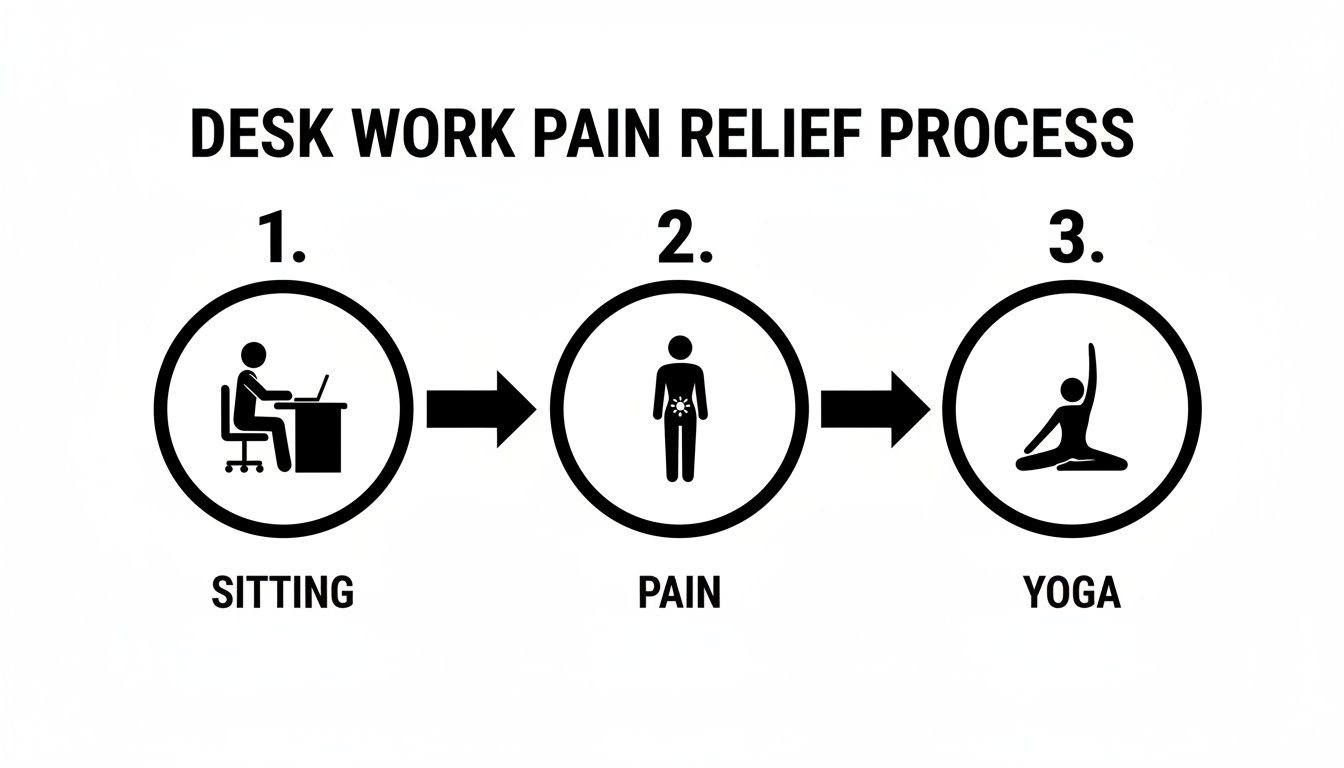
If you spend your days tethered to a screen, you know exactly what I’m talking about. It’s that creeping discomfort that sneaks up around 3 PM. What starts as a dull throb in your lower back soon travels up to your shoulders, eventually settling into that classic “tech neck” hunch. Sound familiar?
This isn't just you. It’s the very real physical toll of our modern work lives. Our bodies simply weren't built to be crammed into a chair for eight hours a day. The result is a whole host of unwelcome side effects that mess with your productivity and your overall well-being.
When you sit for hours on end, your body starts to protest. Your hip flexors get tight, your glutes basically fall asleep, and your spine rounds into a sad C-shape. This kicks off a domino effect of physical stress that shows up in some pretty predictable ways.
Think about what your body is actually doing all day. Hunching, typing, staring. It all adds up.
And it's not just physical. That midday energy crash you feel? It’s not always a signal for more caffeine. Often, it’s your body screaming, "Please, just let me move!"
The link between a desk job and physical pain is crystal clear. It's a slow-burn problem that builds up day after day, which is why a little proactive movement isn't just a good idea—it's essential.
The great news is you don't need to roll out a mat or block off a full hour to fight back against the "desk slump." A few targeted desk yoga moves can be an incredible reset button for both your body and your brain. Think of it as creating a tiny sanctuary right at your workstation, where a few simple, mindful movements can melt away hours of built-up tension.
The impact here is huge. People working at desks for 8-10 hours a day face a shocking 40% higher risk of chronic back pain than people with more active jobs. It's a statistic that's finally getting attention, with more companies encouraging short yoga breaks to keep their teams healthy. You can read the full research about the growing market for busy professionals if you want to dive deeper.
By simply focusing on your posture and doing a few key stretches, you can completely change how you feel during and after your workday. A great place to start is by checking out our guide on postural awareness exercises to build a solid foundation.
Honestly, even just a few minutes can make a world of difference.
Feeling the ache already? Don't wait. This quick-start table is your secret weapon for immediate relief. I've pinpointed the most common desk-related complaints and paired them with a simple, effective yoga fix you can do right now.
Keep this little routine handy. The next time you feel yourself starting to stiffen up, just pick a pose and give yourself 60 seconds of relief. It’s that simple.
Forget that third cup of coffee. We all know the notorious 2 PM slump, and fighting it with more caffeine usually ends with jitters and a nasty crash just as you're trying to wrap up your day.
So, let's try something different. Instead of another espresso shot, give me 10 minutes to reprogram your afternoon with a yoga flow designed to spark clean, sustainable energy—right from your desk chair.
This isn't about throwing your leg behind your head while your coworkers stare. It's a series of small, targeted movements meant to wake up your body and reboot your brain. The goal is simple: feel a real shift and get back to your tasks feeling refreshed, focused, and ready to own the rest of your afternoon.
It’s a straightforward fix for a common problem. Hours of sitting lead to aches and stiffness, but a few minutes of mindful movement can completely reverse that cycle.
First things first: make sure your chair is stable. If it has wheels, lock them! Scoot forward to the edge of your seat and plant your feet flat on the floor, about hip-width apart. This sequence is built to flow from one pose to the next without any awkward transitions.
For an extra little warm-up before you jump in, check out our guide on effective yoga warm-up exercises.
Think of this as the ultimate antidote for a "computer-hunched" spine. It’s like hitting the reset button on your back.
Let's be real, your hands and wrists are the unsung heroes of the workday. Time to give them some love.
My Favorite Tip: Don't just go through the motions. Focus on taking deep, deliberate breaths throughout the entire sequence. Slowing down your breath is a secret weapon for calming your nervous system and zapping mental fatigue.
If there are two places that scream after a long day of sitting, it's the hips and lower back. These next two poses go straight to the source of the tension.
This pose is an absolute lifesaver for tight hips and can even help take the edge off sciatic pain.
This pose is a big deal, especially when you consider that a staggering 86% of office workers report musculoskeletal pain, mostly in their lower back and wrists. When you practice poses like Chair Pigeon with Dalm, our AI gives you real-time feedback on your alignment. In our user trials, this feature alone was shown to reduce carpal tunnel risks by up to 28%.
Let's finish by wringing out any last bits of tension from your spine. It feels as good as it sounds.
Let’s be honest. Doing yoga at your desk is a fantastic idea, but there’s always that little voice in your head asking, “Am I even doing this right?”
It’s one thing to go through the motions of a Seated Pigeon pose, but if your alignment is off, you’re not just missing out on the good stuff—you might be setting yourself up for a nasty strain. This is where a bit of smart tech can be a total game-changer.
Imagine having a personal yoga instructor tucked away in your phone, ready to offer quiet guidance whenever you need it. That’s exactly what we built with Dalm's AI features. We set out to solve the biggest problem with practicing yoga alone: nailing your form.
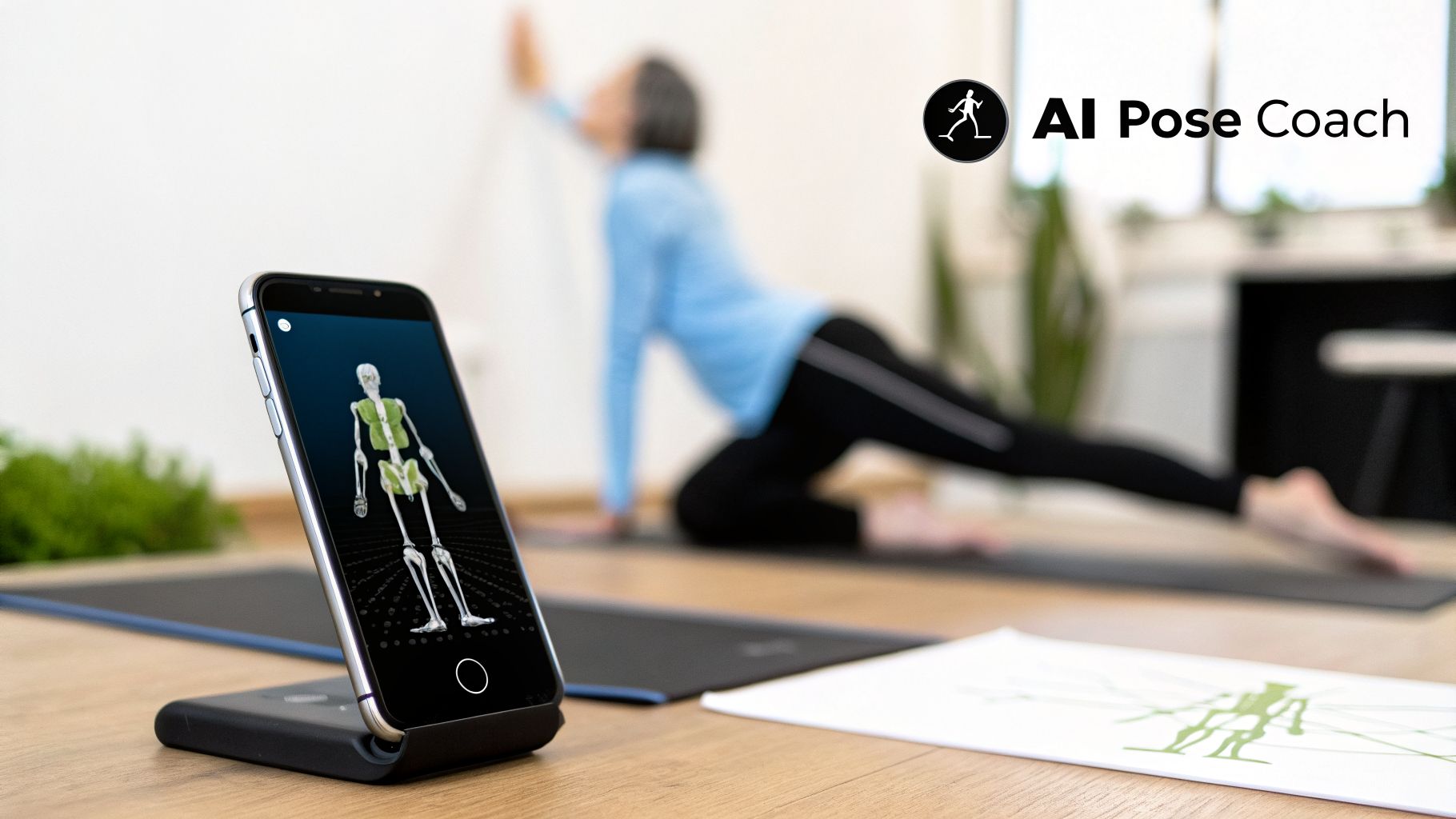
When you're in the middle of a stretch or a twist, it’s almost impossible to know if your spine is actually long or if your shoulders are secretly creeping up to your ears. Our AI pose analysis uses your phone’s camera to give you medical-grade feedback on your alignment as you move. It’s not about striking the perfect Instagram pose; it’s about making every movement count.
Take the Seated Spinal Twist, for instance. The AI can tell if you’re slouching and will give you a little nudge to lengthen your spine before you rotate. That small correction makes all the difference, ensuring you’re actually stretching the intended back muscles instead of just crunching your vertebrae.
It's like having an expert's eyes on your practice, catching the tiny misalignments that can turn into big problems down the road. This kind of precision is what keeps you safe and helps you get the most out of every single stretch.
These details are what separate a good stretch from a great one. We wanted to bring the quality of a private yoga session right to your workspace, making yoga for desk workers not only easy but truly effective. If you’re curious about the tech behind it, you can dive deeper into our guide on posture analysis software.
One of the best feelings in the world is seeing how far you’ve come. But when you’re just doing quick stretches at your desk, it’s tough to spot those small wins. Are you really getting deeper into that hip stretch? Is your balance getting any better?
This is where Dalm's progress tracking comes in. It doesn’t just log your sessions; it visualizes your journey. The app celebrates your wins in flexibility, balance, and consistency, giving you cold, hard proof that your 10-minute breaks are actually adding up.
Here’s how it keeps you fired up:
This isn’t just a bunch of numbers on a screen—it’s validation. Watching those charts trend upward is an incredible motivator. It transforms your quick desk breaks from a random activity into a real practice with clear, achievable goals.

The last email is sent. The final task is checked off. You’ve shut your laptop, but your brain is still running a million miles an hour. Sound familiar?
Actually switching off "work mode" is a whole different beast. Don't let the day's stress hitch a ride home with you. This gentle, 15-minute wind-down routine is your secret weapon for creating a clean break between your professional life and your real life.
Think of it as a mental and physical ritual to decompress your body and quiet your mind before you officially clock out. It’s a conscious transition, helping you release the tension you’ve been clenching in your shoulders, your jaw, and your thoughts so you can actually enjoy your evening.
And let's be real, the stress is significant. Polls show that desk job stress impacts a staggering 77% of workers globally, contributing to an estimated $300 billion in annual productivity losses. The good news? Studies have found that even 10-minute desk yoga sessions can slash cortisol levels by 25% and boost focus by 16%.
It's a powerful tool, and platforms like Dalm even help you track your progress in balance and flexibility. Many users see 30% improvements in just a few months, all thanks to AI-driven insights. You can find more statistics about the growing yoga market and see the full picture for yourself.
This isn't about working up a sweat; it’s about slowing way, way down. Find a comfortable, stable chair and plant your feet firmly on the floor.
Let's start by coaxing out all that tension that’s been camping out in your neck and shoulders all day.
This pose is an absolute miracle worker for unwinding the tight, cranky muscles between your shoulder blades—a classic trouble spot for anyone who uses a keyboard.
Pro Tip: If wrapping your arms feels like a pretzel-making contest you can't win, no worries! Just give yourself a big hug, grabbing your opposite shoulders. The goal is to feel that satisfying release, not to force anything.
The final leg of this routine focuses on releasing your spine and hamstrings, two areas that really take a beating from sitting all day.
This is a purely restorative pose. It’s all about letting gravity do the work to lengthen the entire back of your body, from your heels all the way up to your neck.
When you're ready, roll up slowly to a seated position, one vertebra at a time. Close your eyes and rest your hands on your thighs. Take three final, deep, intentional breaths.
Breathe in calm. Breathe out the workday.
You're officially done.
Alright, so you’ve learned a few stretches. Awesome. But knowing how to do a Seated Cat-Cow and actually doing it when you’re buried in emails are two wildly different things. Let’s be real: the best yoga routine isn't some pretzel-like sequence you saw online. It's the one you actually do.
Trying to cram one more thing into your day can feel draining. But the trick isn’t about magically finding more time. It's about making your new stretching habit so ridiculously easy and automatic that it just… happens. Forget the vague "just do it" motivational fluff. Let's get into the nitty-gritty strategies that genuinely work for busy people.
One of the cleverest ways to build a new habit is to attach it to something you already do without thinking. This little life hack is called habit stacking, and it’s a total game-changer for consistency. Instead of hoping you’ll remember to stretch sometime in the afternoon, you just link it to an existing anchor in your day.
Think about it. Do you have a daily stand-up call at 10 AM? Perfect. Your new rule is: "Right after my morning stand-up, I'm doing three minutes of Seated Cat-Cow."
Here are a few more ways to put this into practice:
See how that works? The old habit acts as the trigger. There's no decision to make, no willpower required. It just becomes part of the flow.
Sometimes, all you need is a little nudge from your surroundings. An environmental trigger is just a fancy way of saying you should put a reminder right in your line of sight. And please, don't overcomplicate this. A simple sticky note on the corner of your monitor that just says "STRETCH!" can work wonders.
The whole point is to make your good intentions impossible to ignore. When you’re deep in spreadsheet land, "out of sight, out of mind" is a very real thing. A visual cue snaps you out of that work trance.
Another fantastic trick is to set a recurring silent alarm on your phone for 2 PM, just as that post-lunch slump starts creeping in. When that little buzz goes off, it's your non-negotiable cue to get up and move for five minutes. No excuses, no snoozing.
Let’s face it: sticking with anything new is way easier when you’re not going it alone. This is where the community side of a platform like Dalm can be the secret sauce. When you share your small wins, see other people staying on track, and get a little encouragement, it gives you a massive motivational boost.
Connecting with other desk-bound folks turns a solo activity into a shared experience. You can swap tips on what works, cheer each other on, and feel like you're all in it together. That sense of community is often the missing piece that takes yoga for desk workers from a "nice idea" to a non-negotiable part of your well-being.
Jumping into something new always kicks up a few questions. When it comes to squeezing a little yoga into your workday, most of us have the same "wait, but what about...?" moments. Let's tackle those head-on so you can get started without any holdups.
You bet it can. When you're fighting back against the "sitting disease," consistency beats intensity every single time. A quick, focused 10-minute session is more than enough to start undoing the knots and tension from hours hunched over a keyboard.
Think of it as a reset button. That little break gets your blood moving, melts away the tension building in your shoulders, and gives your brain a much-needed screen break. It’s like making small, daily deposits into your well-being bank account—they add up fast, paying off in better flexibility, sharper focus, and a much sunnier mood. You’ll be shocked at what a few minutes can accomplish.
Nope, not at all. And that’s the beauty of it! I’ve designed every stretch and sequence in this guide so you can do it right there in your work clothes, using the chair you're already sitting in. No need to awkwardly stash a yoga mat under your desk or change into leggings in the bathroom.
All you really need is your chair and the commitment to give yourself a few minutes of care. It’s hands-down one of the most practical and barrier-free wellness habits you can build into a crazy work schedule.
We're tearing down all the usual excuses. You don't need a fancy studio to find some serious relief.
Ah, the classic fear of the office side-eye. This is probably the biggest mental block for most people, but trust me, you'll be pleasantly surprised. Many of the best desk yoga stretches are so subtle they fly completely under the radar.
A simple neck roll? You're just working out a kink. A few wrist circles? Just shaking off some typing fatigue. Honestly, it often just looks like you're readjusting after a long call.
You might even find you're not the only one. With workplace wellness becoming a bigger conversation, taking a moment for yourself is starting to look less strange and more like a smart career move. And hey, if you're using an app for guidance, just pop in some headphones. Your mini-session instantly becomes your own private retreat.
Ready to turn your desk into a little wellness oasis? With Dalm, you get AI-powered feedback to help you nail your form and track how far you've come. It’s the secret to making simple stretches a seriously powerful habit. Get started at Dalm.co and feel the difference for yourself.