
Yoga for Upper Body Strength a Guide to Toned Arms Shoulders and Back
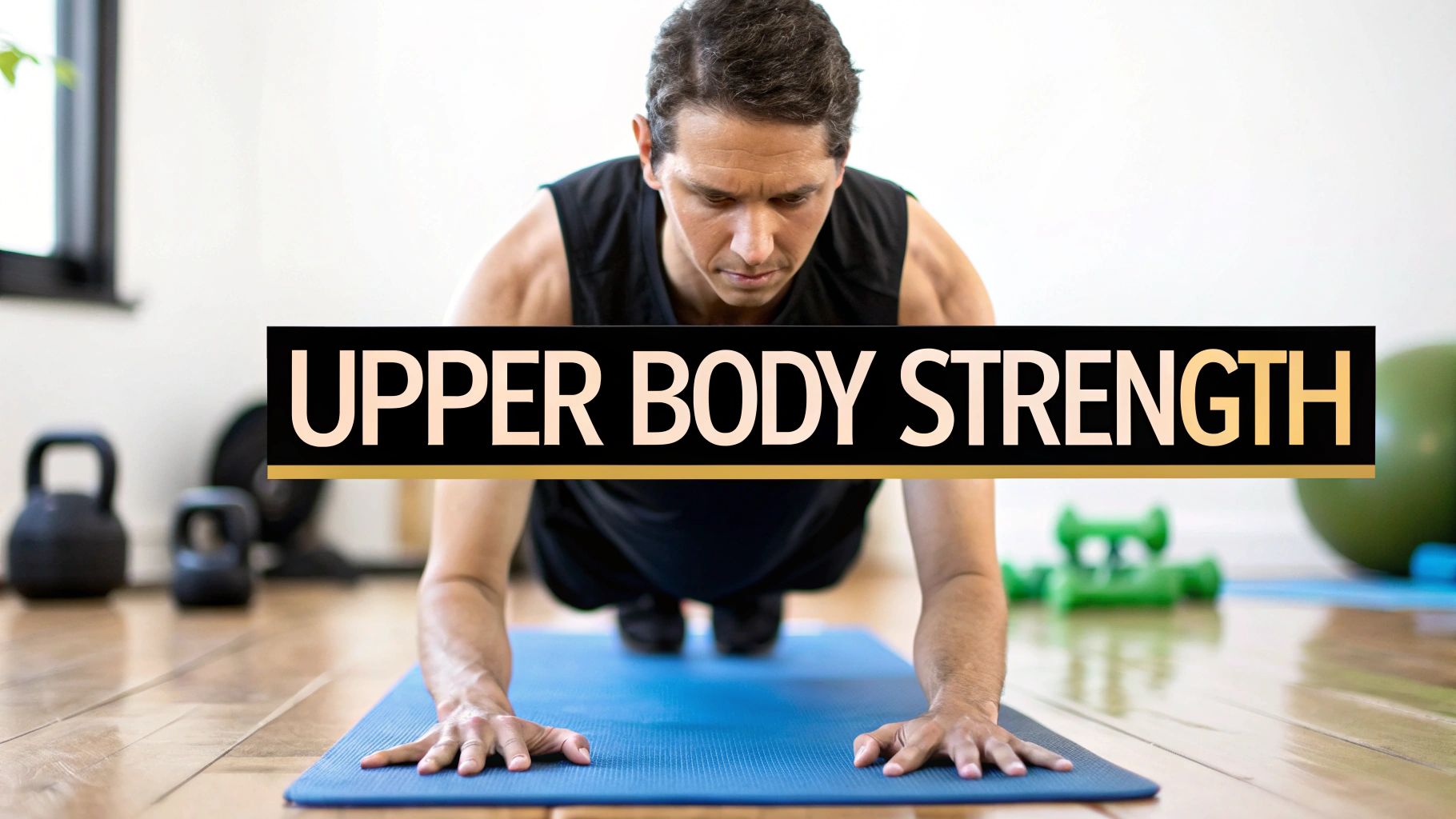
Let's ditch the old myth that yoga is just for stretching. If you're looking to build serious upper-body strength—we're talking powerful arms, sculpted shoulders, and a rock-solid back—your mat is one of the best tools you have. It’s all about using your own body as the ultimate resistance machine.
This approach carves out a lean, resilient physique, and you won't have to touch a single dumbbell to do it.
When someone says "get stronger," your mind probably jumps to clanging weights and sterile gym equipment. But what if I told you that your yoga mat is where the real magic happens? The secret is in how yoga builds strength. It's not about endless reps; it's about sustained tension, bodyweight resistance, and getting all your muscles to work together as a team.
Poses that seem simple, like Plank, Downward-Facing Dog, and the infamous Chaturanga, are so much more than stretches. They are intense, full-body exercises that put your muscles to work in ways traditional lifting just can't.
Holding these postures forces your shoulders, triceps, chest, and back to fire up and work in perfect harmony. This creates a kind of functional strength that a few isolated bicep curls could only dream of replicating.
Instead of just mindlessly pumping iron, yoga demands that you stabilize, balance, and control your entire body. This integrated approach doesn't just build muscle; it also sharpens your postural awareness and core stability.
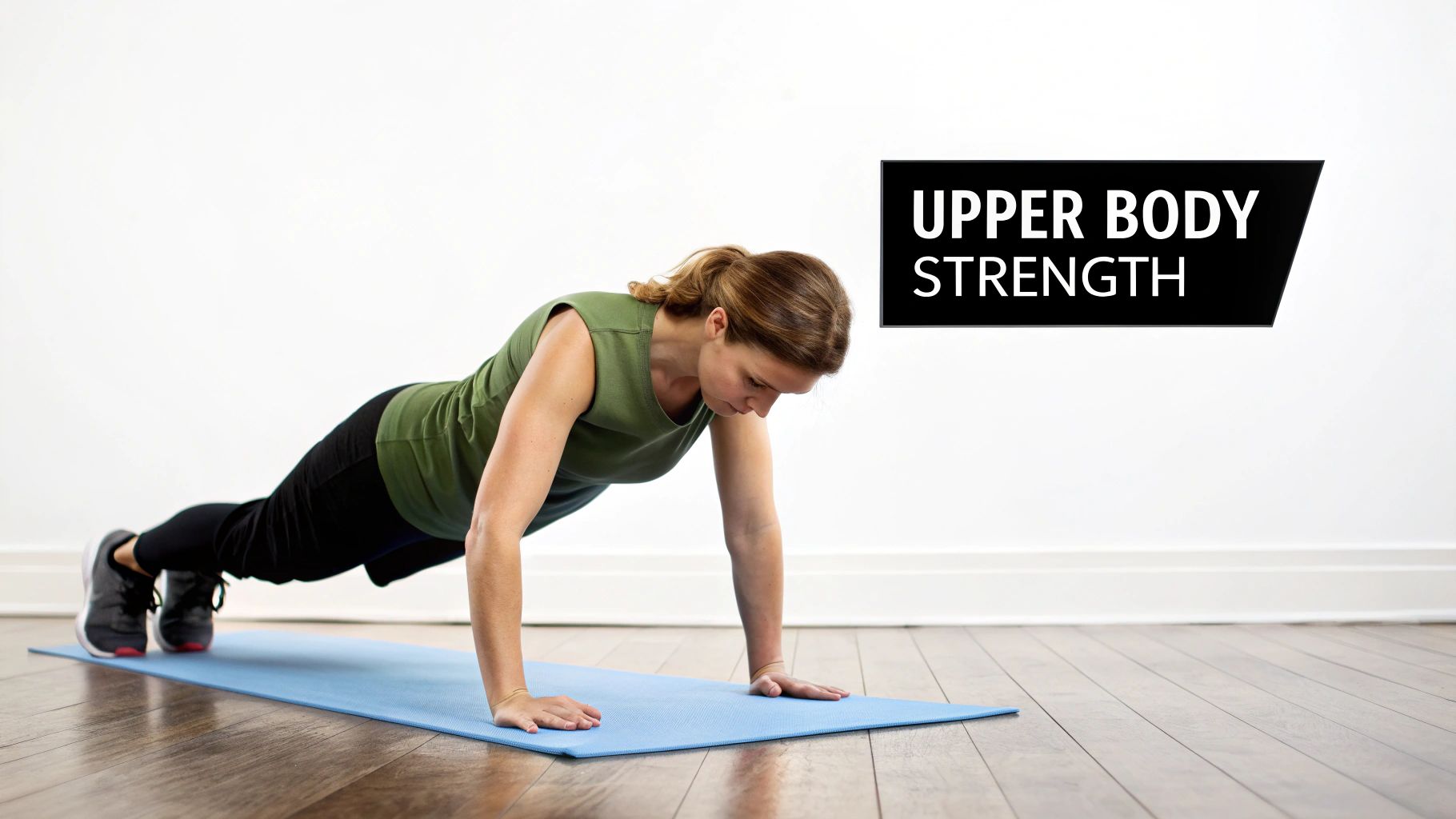
Let's break down how a yoga practice really stacks up against a traditional gym workout for building that upper-body power.
| Yoga vs Traditional Strength Training for Your Upper Body |
| :--- | :--- | :--- |
| Attribute | Yoga | Traditional Weight Training |
| Resistance Type | Bodyweight (dynamic and isometric) | External weights (dumbbells, barbells) |
| Muscle Engagement | Integrated, full-body movements | Often isolated muscle groups |
| Key Benefits | Builds functional strength, stability, and mobility | Excellent for hypertrophy (muscle size) |
| Risk of Injury | Lower risk, focuses on alignment and control | Higher risk if form is compromised |
| Accessibility | Minimal equipment needed; can do anywhere | Requires gym access or expensive gear |
Both are fantastic, but as you can see, yoga brings a unique blend of strength and holistic body control to the table.
And hey, this isn't just a hunch from your friendly neighborhood yogi. The science is there to back it up. A huge meta-analysis covering 22 trials and more than 1,500 people found that yoga significantly improves physical function, including strength, with results that hold their own against traditional active training methods. You can dive into the nitty-gritty of these yoga strength findings in the research.
The real beauty of using yoga for upper body strength is that you build power you can actually use. It’s the strength to haul in all the groceries in one trip, lift your kid into the air, or push yourself up with ease—all while creating those long, toned muscles.
Here's the catch, though. You can't just go through the motions and expect results. Unlocking all this potential comes down to one thing: proper form.
This is where modern tech can be a game-changer. Think of an AI-powered tool like Dalm as your personal alignment coach. It gives you real-time corrections right when you need them. Imagine getting an instant buzz letting you know your shoulders are rounding in Plank. That kind of precise guidance ensures every ounce of effort you put in is building strength safely and effectively, helping you crush your goals from day one.
Alright, let's get down to business. If you want to build serious upper-body strength with yoga, forget about those pretzel-like poses you see on Instagram. The real magic happens when you master a few fundamental powerhouses.
These are the poses that pop up again and again in any good vinyasa flow. Getting them right isn't just a suggestion—it's absolutely essential for building a strong, injury-proof foundation. We're going to dive into Plank, Chaturanga, Downward-Facing Dog, and Dolphin Pose. Think of them as your primary colors; once you nail these, you can paint any picture you want.
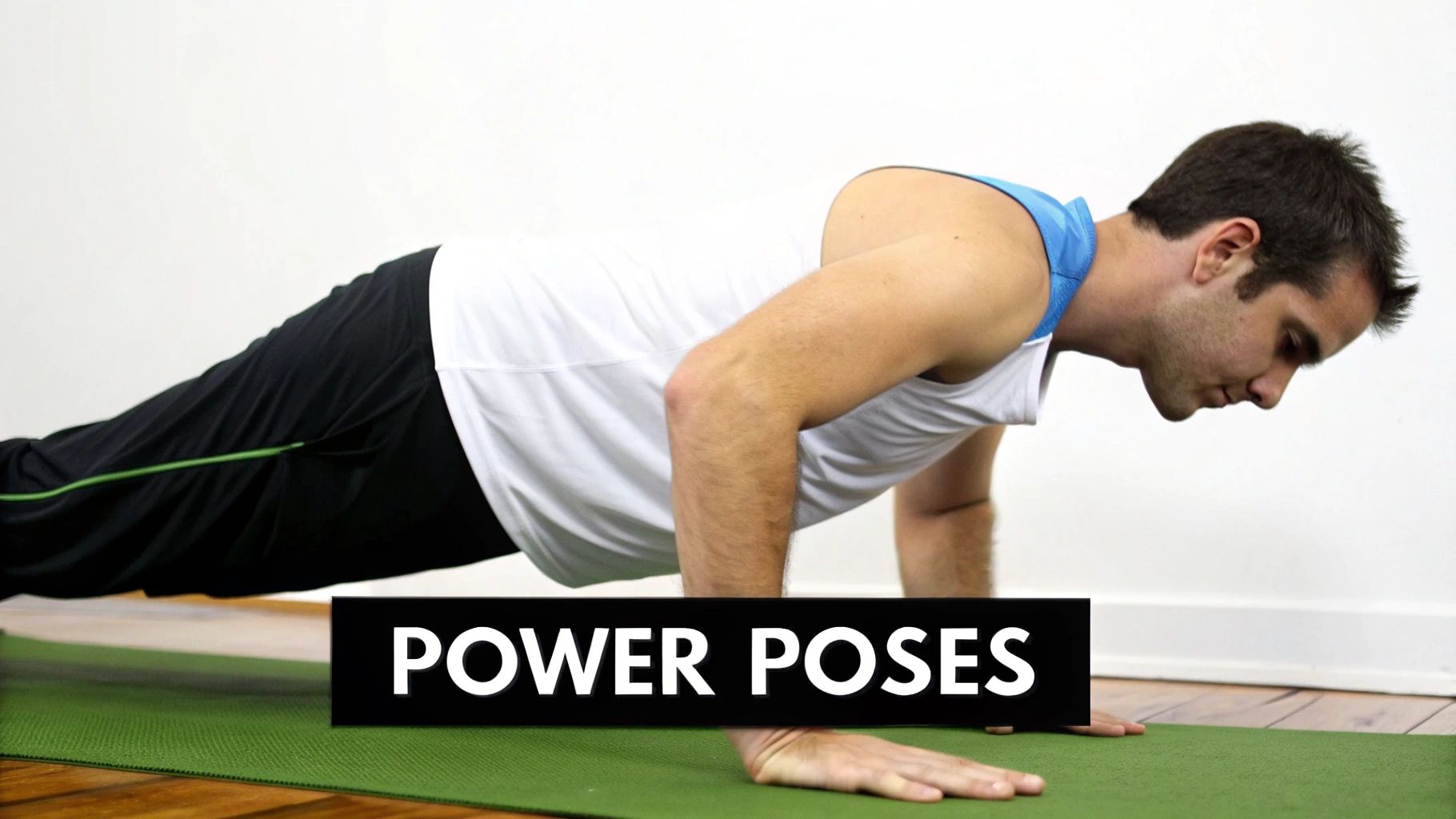
The humble Plank is the absolute cornerstone of yoga for upper body strength. Sure, it looks simple, but an active, engaged Plank is a full-body inferno that sets your shoulders, chest, and core on fire. The goal isn’t to just hang out; it's to create tension everywhere.
One of the most common things I see is people letting their hips dip or their shoulder blades "wing" out. This is exactly where real-time feedback from a tool like Dalm can be a game-changer. It’ll ping you the second your form starts to falter, so you can correct it on the spot and build strength the right way.
Ah, Chaturanga. The pose everyone loves to hate. And for good reason—it’s ridiculously challenging. The biggest mistake people make is just collapsing toward the floor and letting gravity win. This not only cheats you out of any strength gains but is a fast track to a shoulder injury.
The key is to think of Chaturanga as a moving Plank. Your body should stay in one solid, straight line from your head to your heels as you lower down. Your elbows need to hug your ribcage like they're telling them a secret. It’s not a dive-bomb; it's a controlled descent.
To build up that power, leave your ego at the door and modify. Dropping your knees to the mat is a fantastic way to focus on the upper body mechanics without your form going haywire. Remember, in a full push-up or Chaturanga, you're pushing around 70% of your body weight. Building up to that is smart, not weak.
So many people treat Downward-Facing Dog like a rest stop. And while it can be a nice break, it's also a powerhouse strength-builder when you do it with intention. Instead of just hanging out in your shoulder joints, use it as a chance to actively push and lengthen.
Here’s what to focus on:
This active pressing motion builds incredible strength and endurance in your shoulders and triceps. It's the groundwork that prepares you for all the fun stuff, like arm balances, down the road.
Alright, we’ve laid the groundwork and broken down the key poses. Now it’s time for the fun part: putting it all together. A truly effective yoga sequence isn’t just a random string of poses; it’s a conversation your body has with the mat, where each movement builds on the last.
Think of this sequence as your blueprint for building some serious upper-body power. The goal isn’t to nail it perfectly on day one but to connect your breath to your movement. When you get that right, you’ll build strength without even thinking about it.
Ready to flow?
Jumping straight into the tough stuff is a recipe for disaster. You’ve got to get the blood pumping and your muscles ready for action. A good warm-up is non-negotiable—it preps your body and, just as importantly, helps keep you injury-free so you can keep showing up.
This is where the magic happens. Move through this flow with intention, focusing on the feeling, not just the shape. Remember, the transitions between poses are just as important as the poses themselves. Stay engaged and move with control.
This little loop is the engine of your practice. Run through the entire sequence 3-5 times on each side. You’ll build some serious heat and find out what your arms are really made of.
The secret to getting stronger with yoga isn't some ancient, hidden technique. It's showing up consistently and getting a little bit better each time. Once this feels manageable, hold your Plank for one more breath or add an extra Vinyasa. Small, steady challenges create huge results.
Feeling the burn and hungry for more? Awesome. Here are a couple of ways to crank up the intensity and keep your progress from plateauing.
And you're not alone in this. The global yoga market exploded to an estimated USD 107.1 billion in 2023 and is projected to clear USD 200 billion by 2030. What does that tell us? People are catching on to the fact that yoga is a powerhouse for building functional strength, not just for stretching. You can see how the practice is evolving by checking out these yoga market trends.
Building real strength means walking a fine line. You have to push yourself, but the real secret is knowing how to challenge your body without accidentally taking yourself out with an injury. This is where a little bit of smart tech can be your best friend, acting like a personal spotter to keep you honest while you build that serious upper-body power.
Let's be honest, injuries happen. We've all felt it—that nagging wrist strain after one too many Planks or the sharp pinch in the shoulder that signals impingement. More often than not, these issues come from tiny, repetitive mistakes in our alignment. It's the subtle rounding of the upper back in Chaturanga or letting the shoulders drift past the wrists that, over time, creates strain instead of strength.
Here’s the tricky part: these little alignment flaws are almost impossible to feel on your own, especially when you’re deep in a pose, concentrating on your breath. You might think you're holding a perfect Plank, but your hips could be sagging just enough to load your shoulders all wrong. This is where getting immediate, precise feedback can completely change the game.
Imagine having a teacher whisper the exact right cue in your ear the second your form starts to falter. That's the magic of AI-driven analysis. It’s like having an expert's eyes on you for every single rep, offering the specific correction you need, right when you need it.
This kind of instant feedback loop does more than just keep you safe—it builds a ton of confidence. When you know your alignment is on point, you feel free to push a little harder and hold a little longer. And that’s where the real strength gains happen.
The diagram below gives you a bird's-eye view of how a well-structured, strength-focused yoga session comes together.

You can see how a solid warm-up gets the body ready for a more dynamic flow, which in turn prepares you for the targeted strength work that builds muscle.
The global yoga community is massive—we're talking over 300 million practitioners worldwide, with more than 36 million right here in the U.S. With that many people on the mat, making sure everyone can practice safely and effectively is a huge deal. You can dive deeper into some really interesting yoga statistics and demographics to get the full scope.
So, how does this smart feedback actually work in a real-life practice? Let's break it down:
This isn't about replacing the beautiful, mindful experience of yoga. It's about making it better. When you can stop guessing about your alignment, you can pour all that mental energy into the feeling of building powerful, functional strength.
One killer yoga session can leave you feeling amazing, but let's be real—the secret sauce for carving out strong arms, shoulders, and back is showing up again and again. Building real strength is a long game. A smart, sustainable plan is what turns a fleeting fitness kick into a genuine, lifelong habit. Think of it as creating a roadmap that actually fits your life, not someone else's.
For most people, the sweet spot for seeing real, measurable gains in upper body strength is practicing 3-4 times per week. This hits that perfect balance of giving your muscles enough of a challenge to adapt while also allowing enough downtime for them to repair and, you guessed it, grow stronger. Always remember, muscles aren't built while you're sweating it out in Plank; they're built while you rest.
Look at your weekly schedule like a puzzle. The goal is to slot in your strength-focused yoga sessions without burning yourself out. Overtraining is a sneaky progress killer, leaving you feeling wiped out and, worse, setting you up for injury.
A tried-and-true approach is to alternate your more intense, upper-body-heavy days with lighter activity or a full-on rest day. This way, you’re always coming to your mat feeling recharged and ready to bring your A-game.
A classic mistake I see all the time is people going hard every single day. True strength is built in the rhythm of stress and recovery. Listening to your body isn't a sign of weakness—it's the smartest training strategy you'll ever use.
Here’s a sample schedule to get you started. Think of it as a template you can tweak to fit your own energy levels and schedule. Consistency over intensity is the name of the game!
This schedule gives you three solid strength days balanced with recovery to keep you progressing without hitting a wall.
Programming is more than just picking which days to practice; it's about what you do when you're on the mat. One of the most critical variables for building strength is how long you hold poses.
As you feel yourself getting stronger, start playing with these numbers. Can you add 15 seconds to your Plank hold? Or maybe one more round to your flow? This principle, known as progressive overload, is the cornerstone of building muscle. It's all about gradually upping the challenge. A fantastic way to stay motivated is by actively tracking your fitness progress to see just how far you've come.
When you start using your own body as a weight room, it’s only natural for questions to pop up. In fact, being curious is a smart move. Let's tackle some of the most common things people ask about building serious upper-body strength through yoga, so you can get on your mat and practice with total confidence.
We'll clear up the confusion right now.
Heck yes, you can. Don't let the peaceful vibe or the lack of clanging iron fool you. At its core, yoga is a powerful form of bodyweight training—and it's brutally effective for sculpting lean, functional muscle.
Think about it for a second. Poses like Crow, Handstand, or even a perfectly executed Chaturanga force you to lift and hold your entire body weight with your arms, shoulders, and core. That sustained tension is what builds real strength and visible definition. The secret sauce is a mix of consistency and progressive overload. That just means gradually holding poses longer, doing more reps, or trying tougher variations over time. When your form is on point, your muscles have no choice but to respond.
This is, without a doubt, the number one complaint I hear from students. And almost every single time, it comes down to how you're placing your weight. Wrist pain is usually a dead giveaway that you're dumping all the pressure into the heel of your palm instead of distributing it across your whole hand.
Here's how to fix it:
Often, the real culprit is your shoulders creeping too far forward past your wrists. It's a subtle mistake, but one that puts a massive strain where it doesn't belong.
This is one of those areas where getting real-time AI feedback is a total game-changer. It can instantly tell you when your alignment is off, helping you fix the problem right on the spot so you can build strength safely and skip the pain.
Look, every body is unique, but most people start to feel a whole lot stronger and more stable within 2-4 weeks of consistent practice (think 3-4 times a week). You’ll just notice that holding Plank feels less like a struggle and your transitions from one pose to another are smoother.
As for seeing visible changes in muscle tone? That typically starts to show up after about 6-8 weeks of sticking with it. The key is to chase progress, not some idea of perfection. Tracking how long you can hold a pose or how steady you feel is a brilliant way to see your hard work paying off and keep your motivation high.
The best answer? You need both! They work their magic in different, yet equally important, ways.
Holding a static pose like Plank or Dolphin for 30-60 seconds builds incredible muscular endurance and isometric strength. This is how you develop that deep, rock-solid stability.
On the flip side, moving through a dynamic flow with a bunch of Sun Salutations builds strength through a full range of motion while also getting your heart rate up. A truly powerful practice marries the two. Use those long, static holds to really dial in your form, then bring that newfound stability and awareness into a more fluid, powerful sequence.
Ready to stop guessing and start building strength with precision? Dalm uses AI-powered analysis to give you real-time feedback on your form, ensuring every pose brings you closer to your goals. Perfect your practice and unlock your true potential by exploring the app at https://dalm.co.