
Yoga Poses for Spinal Decompression: Gentle Stretches for Back Pain Relief
Feeling like your spine is getting shorter by the day? You're not alone. The constant pull of gravity, combined with hours of sitting, can leave our vertebrae feeling squished and our backs achy. But what if you could gently create space, lengthen your spine, and find lasting relief? That’s where spinal decompression comes in, and yoga is one of the most powerful tools to achieve it safely and effectively.
This isn't about extreme stretches or painful contortions. We’re exploring a curated list of eight powerful yoga poses for spinal decompression, each designed to gently elongate your spine, hydrate your discs, and release built-up tension. Think of it as hitting the reset button on years of compression, all from the comfort of your mat.
Whether you're a seasoned yogi or can barely touch your toes, these poses offer a path to a happier, healthier back. We’ll break down each movement with step-by-step instructions, highlight common mistakes to avoid, and show you how to use modifications to make every pose work for your body. Get ready to stand taller, move with more freedom, and give your spine the breathing room it deserves.
Don't let the name fool you; Child's Pose is a grown-up powerhouse for spinal relief. Think of it as hitting the reset button on your spine after a long day of being a vertical, gravity-fighting human. This foundational pose gently stretches the entire back body, creating space between each vertebra and providing one of the most accessible yoga poses for spinal decompression. It’s the yoga equivalent of a long, satisfying sigh for your back.
By kneeling and folding your torso over your thighs, you allow gravity to do the heavy lifting, elongating your spine and releasing tension from your neck all the way down to your sacrum. It’s a go-to in restorative yoga classes and a favorite recommendation from physical therapists for a reason: it works.
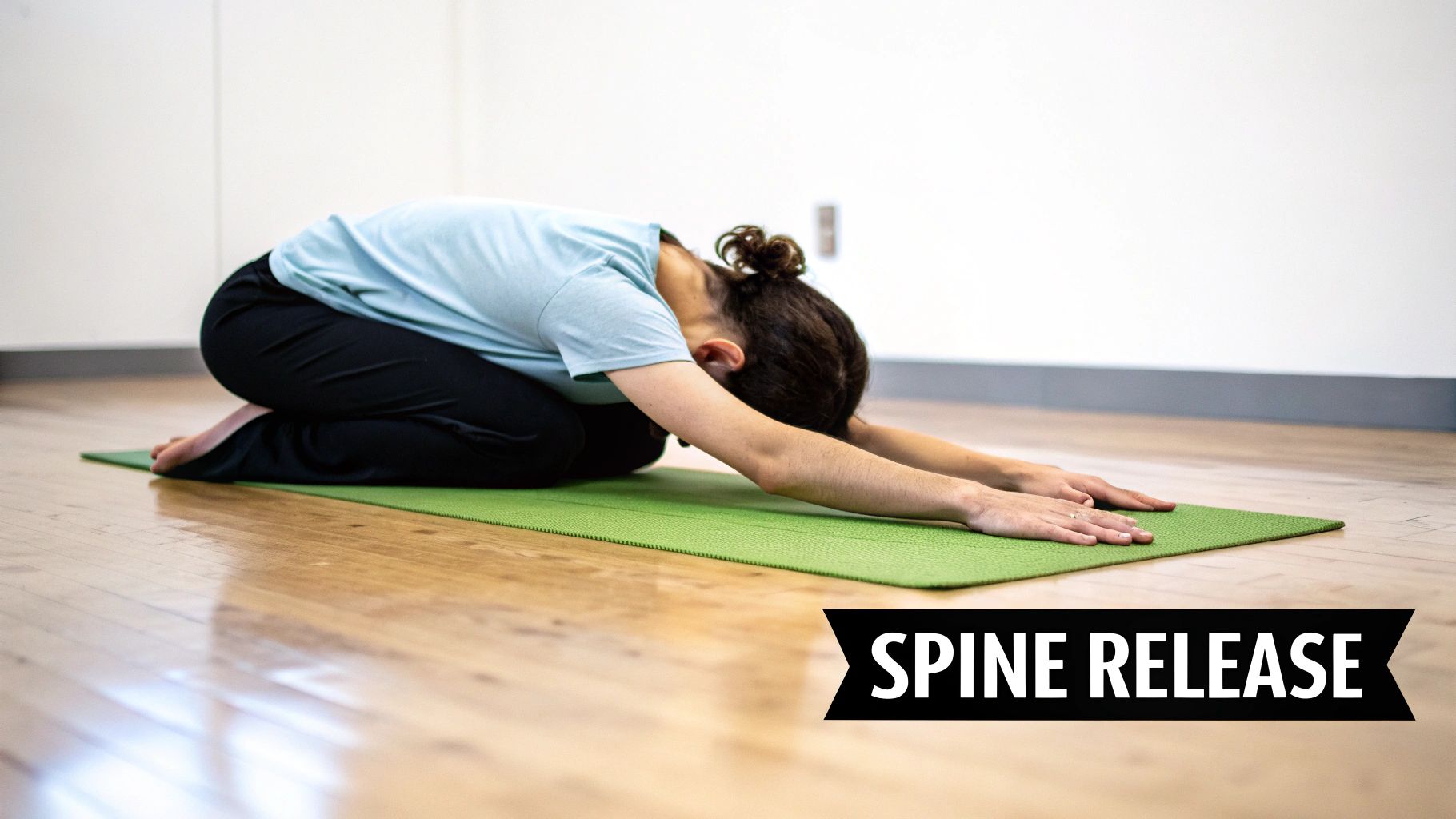
To get the most out of your Balasana, focus on mindful execution rather than just plopping down.
This pose is an excellent entry point for anyone new to yoga. For more foundational poses perfect for newcomers, explore this guide to gentle yoga for beginners.
Often called the superstar of any Vinyasa flow, Downward-Facing Dog is more than just a transition pose; it's a full-body traction machine. This iconic inverted 'V' shape works wonders by using your own body weight and gravity to create length from your tailbone to the crown of your head. It’s one of the most effective yoga poses for spinal decompression because it simultaneously strengthens your arms and legs while gently decompressing the entire spine.
By pressing your hands firmly into the mat and lifting your hips high, you create a gentle, sustained pull that elongates your back. This action provides sweet relief to compressed vertebral discs, making it a cornerstone pose in everything from Ashtanga yoga sequences to post-workout recovery routines for athletes. It’s a dynamic way to stretch your hamstrings, open your shoulders, and give your spine the space it craves.
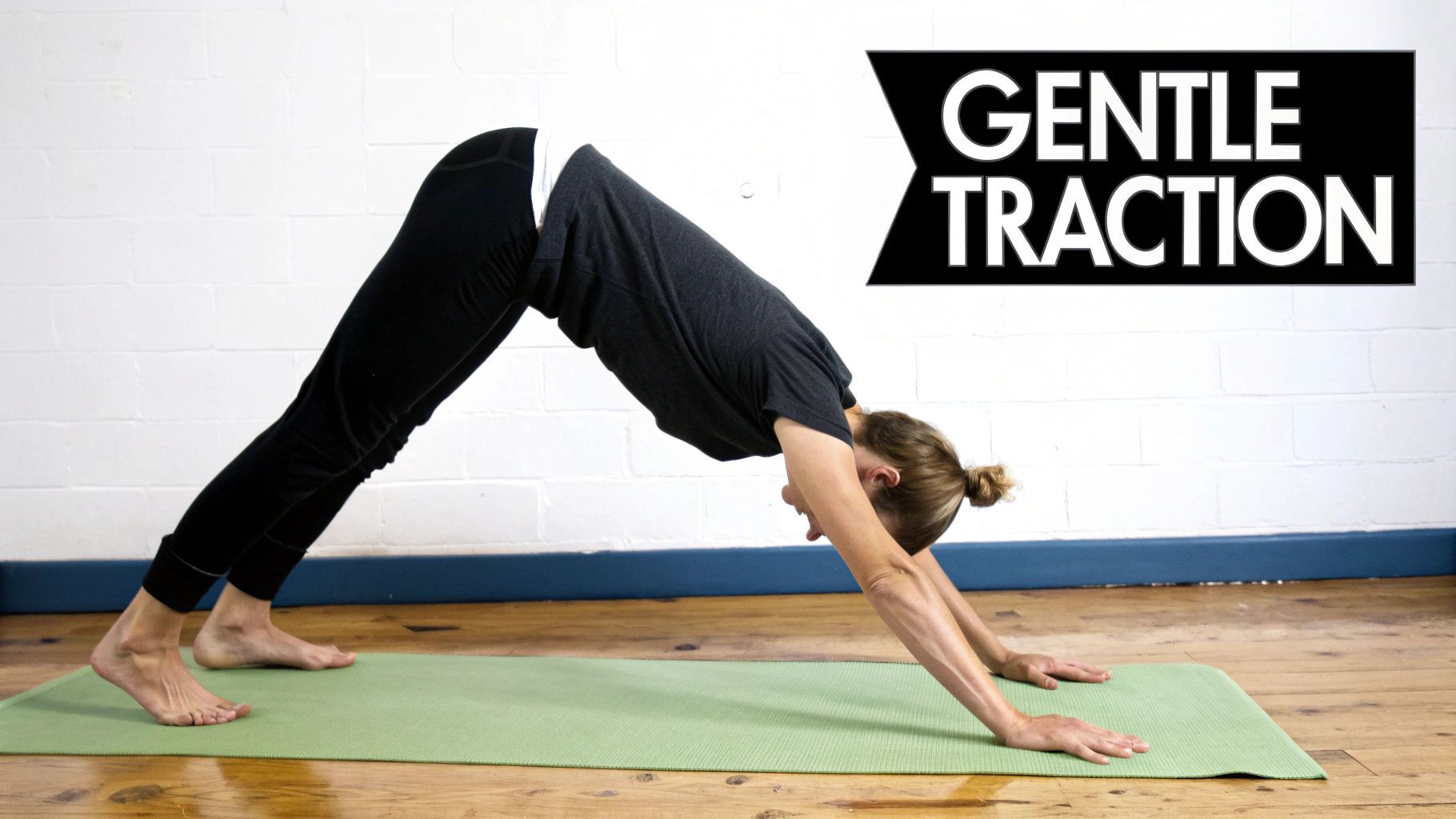
To transform your Downward Dog from a struggle to a sanctuary, focus on alignment over aesthetics. The goal is a long spine, not perfectly straight legs.
If your spine could talk, it would ask for Cat-Cow by name. This dynamic duo isn't a static pose but a gentle, flowing movement that acts like a lubricant for your vertebrae. It’s the ultimate spinal wake-up call, moving your back through its full range of motion-flexion (Cat) and extension (Cow). This rhythmic dance is one of the most effective yoga poses for spinal decompression because it boosts circulation to the spinal discs and creates space with each controlled undulation.
Think of it as flossing for your spine. The alternating arch and rounding motion gently mobilizes each segment of your back, relieving stiffness and rehydrating the spongy discs between your vertebrae. It’s a staple warm-up in nearly every yoga class and a top recommendation from chiropractors for daily spinal maintenance for good reason: it’s simple, safe, and feels incredible.
To transform this from a simple movement into a therapeutic experience, focus on precision and breath.
This pose is a fantastic tool for improving spinal mobility. To build on this, check out these powerful postural awareness exercises to support a healthy back all day long.
If your spine could pick a favorite lazy-Sunday pose, this would be it. The Supine Spinal Twist is a luxurious, gravity-assisted stretch that feels like wringing out a tense sponge. It’s a classic finishing pose in yoga classes for a reason: it masterfully unwinds the spine from the base to the neck, making it one of the most effective yoga poses for spinal decompression.
By lying on your back and gently guiding one knee across your body, you create a mild, controlled rotation. This movement hydrates the spinal discs and releases the tight paraspinal muscles that often contribute to back pain. It's the perfect cool-down after a workout or a long day hunched over a desk, offering profound release without demanding much effort.
To transform this simple twist into a therapeutic experience, pay attention to the details.
If your spine could pick a vacation spot, Legs-Up-The-Wall would be it. This pose is the definition of passive relief, offering a blissful retreat from gravity's relentless pull. It’s one of the most effective and accessible yoga poses for spinal decompression because it requires almost zero effort while delivering maximum benefit. Think of it as hitting the undo button on a day spent sitting, standing, or just being upright.
By simply lying on your back and resting your legs against a wall, you reverse the typical gravitational load on your spine. This gentle inversion allows the vertebrae to separate slightly, easing pressure on the intervertebral discs and encouraging fluid circulation. It's a staple in restorative yoga and physical therapy for good reason: it’s pure, unadulterated spinal rejuvenation.
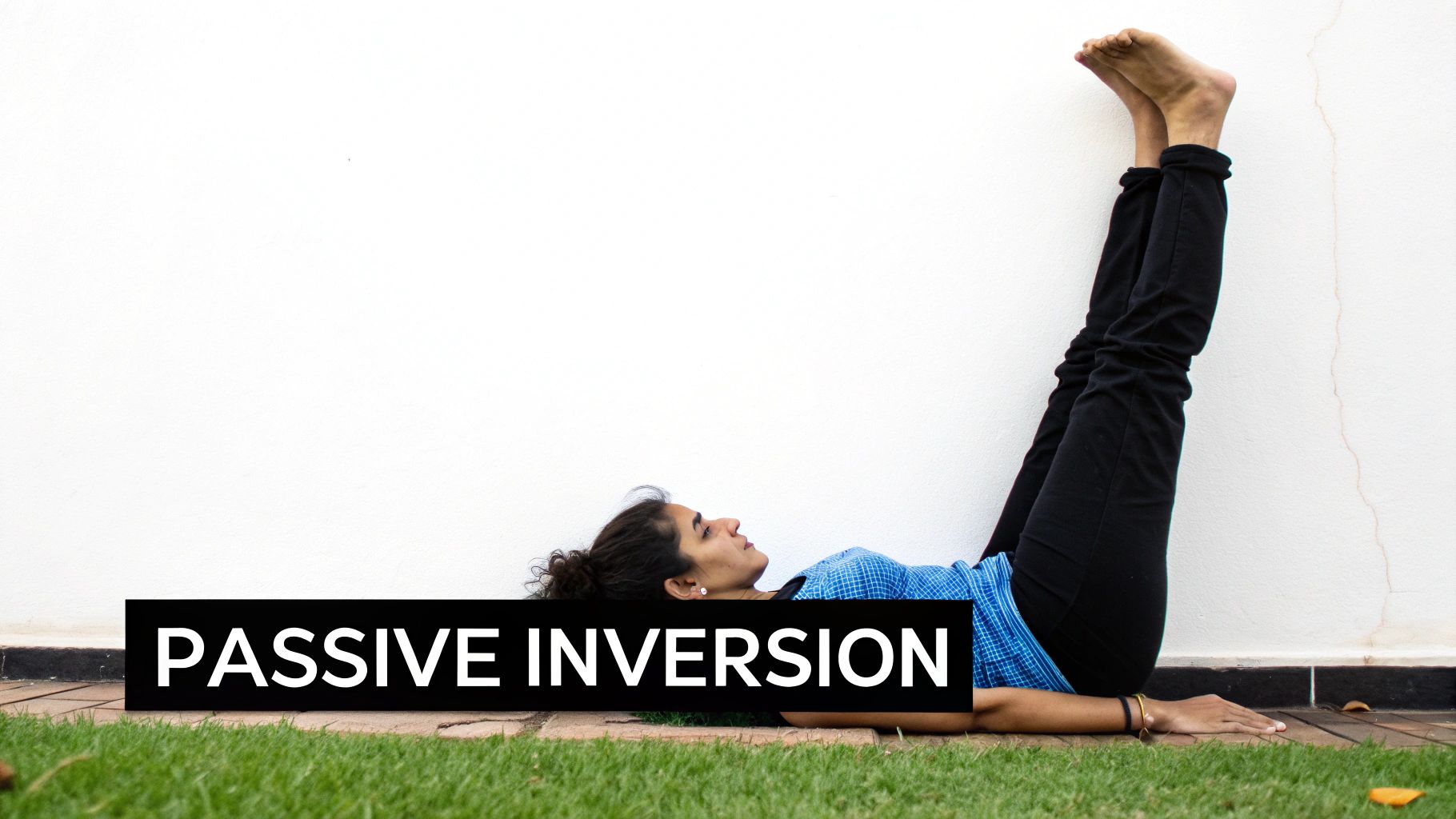
To transform this simple position into a profound release, a few small adjustments make all the difference.
Meet Sphinx Pose, the chill cousin of the more intense Cobra and Upward-Facing Dog. This pose offers a gentle, controlled backbend that feels less like a contortionist act and more like a supportive lift for your spine. Lying on your belly and propping yourself up on your forearms, you create a beautiful, gradual arch that targets the lumbar and thoracic spine, making it one of the most accessible yoga poses for spinal decompression. It’s like giving your spine a mini-vacation from slouching.
By pressing your forearms into the floor, you gently lengthen the front of your body while creating space in the lower back. This action provides a mild, therapeutic compression that encourages blood flow to the spinal discs without the strain of deeper backbends. It’s frequently used in physical therapy and restorative practices to safely build back strength and improve posture, proving that you don’t need to go to extremes to find relief.
To transform this simple shape into a profound release, focus on subtle adjustments and active engagement.
Sphinx Pose is a fantastic building block for back health. For those looking to deepen their practice with more advanced backbends, consider exploring resources like this guide on mastering Upward-Facing Dog.
This pose is the definition of letting it all hang out, literally. Standing Forward Fold uses gravity as its secret weapon, turning your own body weight into a natural traction device for your back. By hinging at the hips and letting your upper body drape towards the floor, you invite a glorious lengthening of the entire spinal column, from your neck down to your lower back. It’s one of the most effective yoga poses for spinal decompression because it’s simple, accessible, and deeply effective.
Uttanasana is a cornerstone of many yoga practices, like the Sun Salutation sequence, for good reason. It not only stretches the hamstrings and calves but also allows the weight of your head to gently pull on the cervical spine, creating space and relieving pressure. Think of it as an effortless dangle that unwinds the day's compression one vertebra at a time, making it an essential tool for back relief.
To get the full spinal-lengthening benefits of Uttanasana, focus on surrender rather than force.
Ready to flip your perspective and give your spine the ultimate antigravity treatment? Supported Shoulder Stand, often hailed as the "queen of all poses," is an inversion that literally turns the compressive forces of daily life upside down. By elevating your legs and torso, you allow gravity to gently pull your spine in the opposite direction, creating a powerful lengthening effect. This is one of the more advanced yoga poses for spinal decompression, promoting disc hydration and boosting circulation.
This pose isn't just about getting your feet over your head; it’s a controlled and systematic lift that supports the body on the shoulders and upper arms, not the neck. The result is a significant release, particularly in the cervical and thoracic spine, as the weight of the lower body creates natural, therapeutic traction. It’s a staple in Iyengar and Hatha yoga for its profound restorative benefits.
Proper alignment is non-negotiable in Sarvangasana. Approach this pose with respect and mindfulness to reap its rewards safely.
You've just navigated a powerful sequence of eight yoga poses for spinal decompression, each one a unique tool for creating space, alleviating pressure, and reclaiming your body's natural alignment. From the grounding surrender of Child's Pose to the gentle inversion of Legs-Up-The-Wall, the journey through these asanas isn't just about stretching; it's about actively counteracting the daily compressive forces of gravity, stress, and modern life.
Remember, the magic isn't in a single, perfect pose. The real transformation happens through consistent, mindful practice. Integrating even a few of these movements into your daily routine is a profound act of self-care. It's a commitment to moving with intention and listening to the subtle language of your body, choosing gentle traction over forceful stretching.
Let’s distill this down to the essentials. Your path to a healthier, happier spine revolves around three core principles:
Feeling empowered? Excellent. Here’s how to translate that energy into action without feeling overwhelmed:
By embracing these yoga poses for spinal decompression, you're not just chasing temporary relief. You are actively rewriting your relationship with your body, building a foundation of strength, flexibility, and resilience that will support you for years to come. You are becoming the primary architect of your own well-being, one mindful breath at a time. Your spine, the literal backbone of your being, will thank you for it.
Ready to take the guesswork out of your alignment and maximize the benefits of every pose? Dalm uses advanced AI and medical-grade sensors to provide real-time, personalized feedback on your form, ensuring you perform these yoga poses for spinal decompression safely and effectively. Stop wondering if you're doing it right and start practicing with confidence by visiting Dalm today.